Mohandas Karamchand Gandhi, known to the world as Mahatma — “Great Soul” — was not merely a political leader. He was a moral philosopher in motion, a man who believed that the manner of resistance was as important as its outcome.
Of all the campaigns he led against British colonial rule in India, none demonstrated his genius more vividly than the Salt March of 1930, a 241-mile walk to the sea that shook an empire.
The Weight of Salt
To understand the Salt March, one must understand what salt meant to ordinary Indians. It was not a luxury. Salt was essential to survival, flavoring food and preserving it in a country where refrigeration did not exist. Every Indian needed it, from the wealthiest landlord to the poorest laborer working in the punishing heat of the subcontinent.
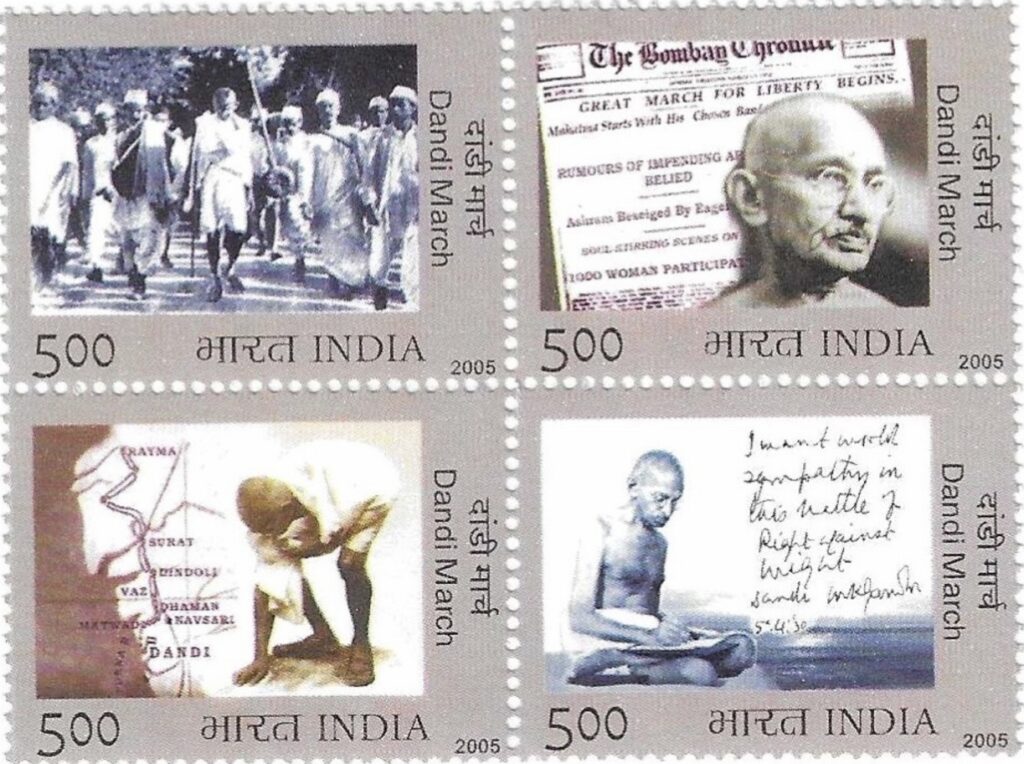
The British colonial government had long held a monopoly on salt production and sale, making it illegal for Indians to collect or produce their own — even from the vast coastline that surrounded them. On top of this prohibition came a salt tax, a burden that fell most heavily on those least able to bear it.
For Gandhi, salt was the perfect symbol. It was universal, it was necessary, and the injustice surrounding it was impossible to deny. When he announced that he would march to the sea at Dandi to make salt in defiance of British law, many of his allies were skeptical.
Even within the Indian National Congress, there were those who thought the plan too theatrical, too simple. Gandhi disagreed. He understood something his critics did not: that symbols, when they carry genuine moral weight, move people more powerfully than arguments.
The March Begins
On March 12, 1930, Gandhi set out from his ashram at Sabarmati with 78 carefully chosen companions. He was 60 years old, lean from years of fasting and austere living, and he walked with a bamboo staff. The route wound through villages across the Indian state of Gujarat, and at each stop Gandhi spoke to crowds about self-reliance, nonviolence, and the illegitimacy of imperial rule. The march lasted 24 days.
What Gandhi grasped intuitively — and what modern observers now recognize as political brilliance — was that the British faced an impossible dilemma. If they arrested him at the outset, they would make a martyr of an old man walking peacefully to the beach.
If they ignored him, they allowed the act of defiance to play out on the world stage. International journalists traveled with the marchers. The story was printed in newspapers across Europe and America. The world was watching.
Salt and Defiance
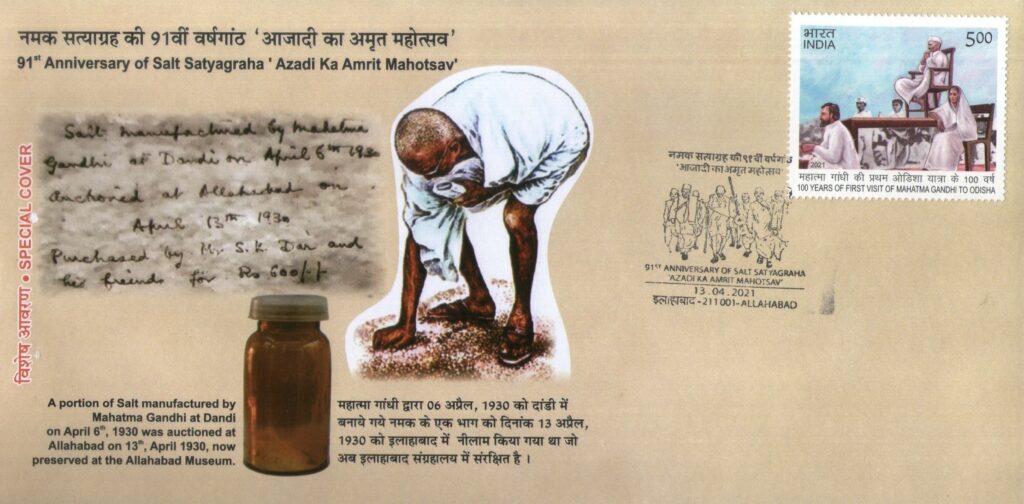
On April 6, Gandhi waded into the Arabian Sea, stooped down, and picked up a small lump of natural salt from the mudflats. With that gesture, he broke the law. The act itself was tiny. Its consequence was enormous.
Across India, the Salt March triggered a wave of civil disobedience. Thousands of ordinary people began making their own salt on beaches and riverbanks. Indians began boycotting British cloth and goods with renewed energy.
The colonial government, rattled, eventually arrested Gandhi in May — and in doing so ignited further protest rather than suppressing it. By the end of the year, over 60,000 Indians had been imprisoned for salt-related civil disobedience.
The most haunting episode came at the Dharasana Salt Works in May 1930, after Gandhi’s arrest, when columns of nonviolent protesters marched toward the salt pans guarded by police. They were beaten with steel-tipped lathis as they walked, row after row, and did not raise a hand in return.
An American journalist, Webb Miller, witnessed the scene and his dispatch appeared in over a thousand newspapers worldwide. The image of disciplined, peaceful suffering under brutal force did more damage to the moral authority of the British Empire than any armed uprising could have.
Legacy
The Salt March did not immediately win Indian independence — that would come 17 years later, in 1947. But it transformed the independence movement from an elite political campaign into a mass phenomenon.
It demonstrated to Indians and to the world that colonial power could be confronted without violence, and that moral clarity, strategic simplicity, and personal courage could unsettle the machinery of empire.
Gandhi’s walk to the sea remains one of history’s most instructive acts of resistance. It proved that the most powerful weapon available to the oppressed is sometimes the most ordinary thing imaginable — a handful of salt, and the willingness to bend down and pick it up.
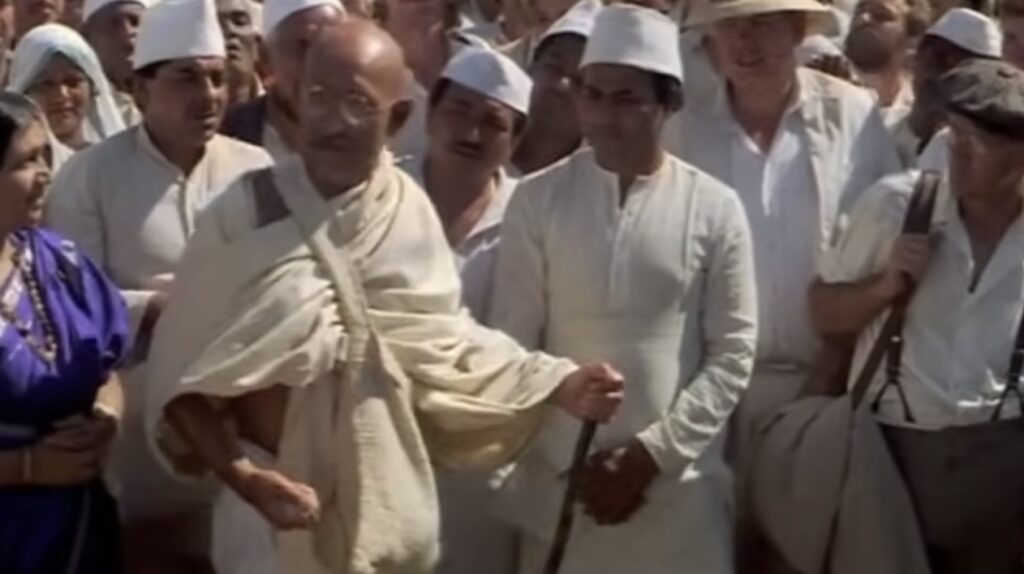
This is a frame grab from the 1980 biopic Gandhi, in which he (Ben Kingsley) is seen with a handful of salt — a crime in British India — and urging the crowd that followed him, and the international reporters in the group, to remain nonviolent.