Every December, millions of homes and offices fill with the vivid red and green of the poinsettia — arguably the most recognizable holiday plant in the world. Few people who buy one give much thought to the man behind the name, yet Joel Roberts Poinsett led one of the most extraordinary lives in early American history.
Diplomat, statesman, amateur botanist, and tireless traveler, Poinsett left behind a legacy that blooms anew every holiday season.
The Man Behind the Plant
Joel Roberts Poinsett was born on March 2, 1779, in Charleston, South Carolina, into a prosperous family. His father, a physician of Huguenot descent, ensured his son received an excellent education, sending him to study in England and later at Edinburgh and at military schools on the European continent.
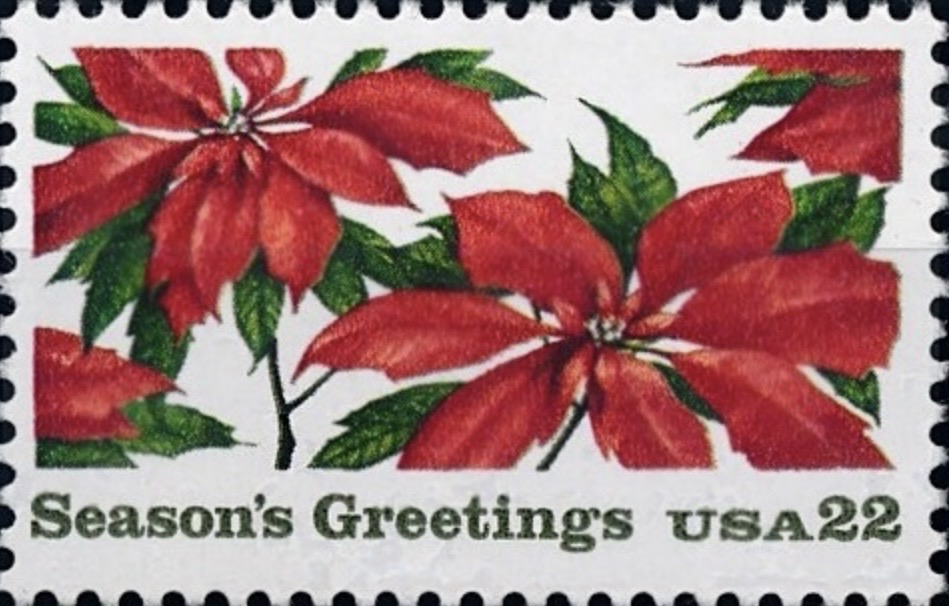
The traditional Christmas stamp for 1985 featured Euphorbia pulcherrima. It was known as the poinsettia as early as 1836; before that it was called the “Mexican flame flower” or “painted leaf.”
Poinsett spent years traveling through Europe and beyond, gaining a breadth of experience unusual for an American of his era. He visited Russia, toured the Middle East, and wandered through parts of Asia before finally returning to the United States in the early 1800s.
His political career was equally wide-ranging. He served in the South Carolina state legislature, was elected to the U.S. House of Representatives, and held a series of diplomatic posts.
President James Madison sent him to South America as a special agent during the revolutionary upheavals there — a posting that gave Poinsett a taste for Latin American affairs. He became so deeply involved in Chilean independence politics, in fact, that he was eventually asked to leave the country. His meddling was not always welcome.
His most consequential diplomatic posting came in 1825, when President John Quincy Adams appointed him the first U.S. Minister to Mexico. Mexico had only recently won its independence from Spain, and relations between the two neighboring republics were both important and delicate.
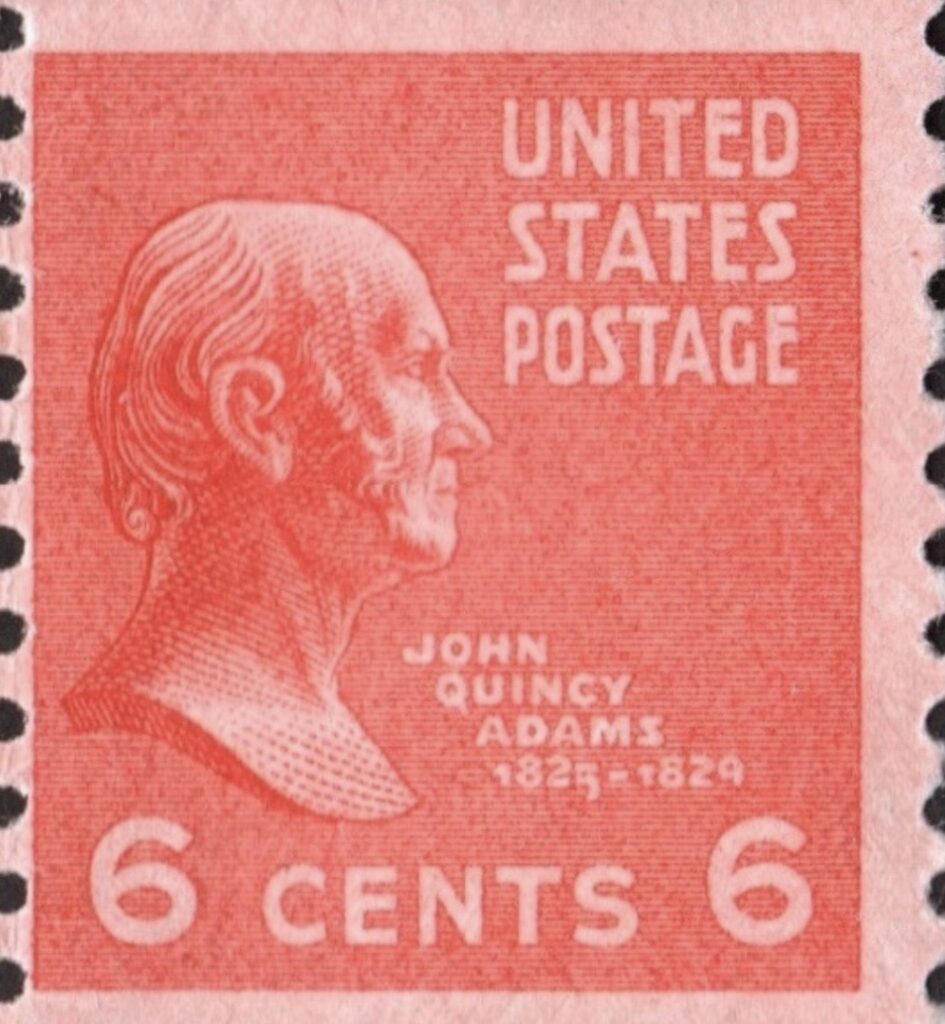
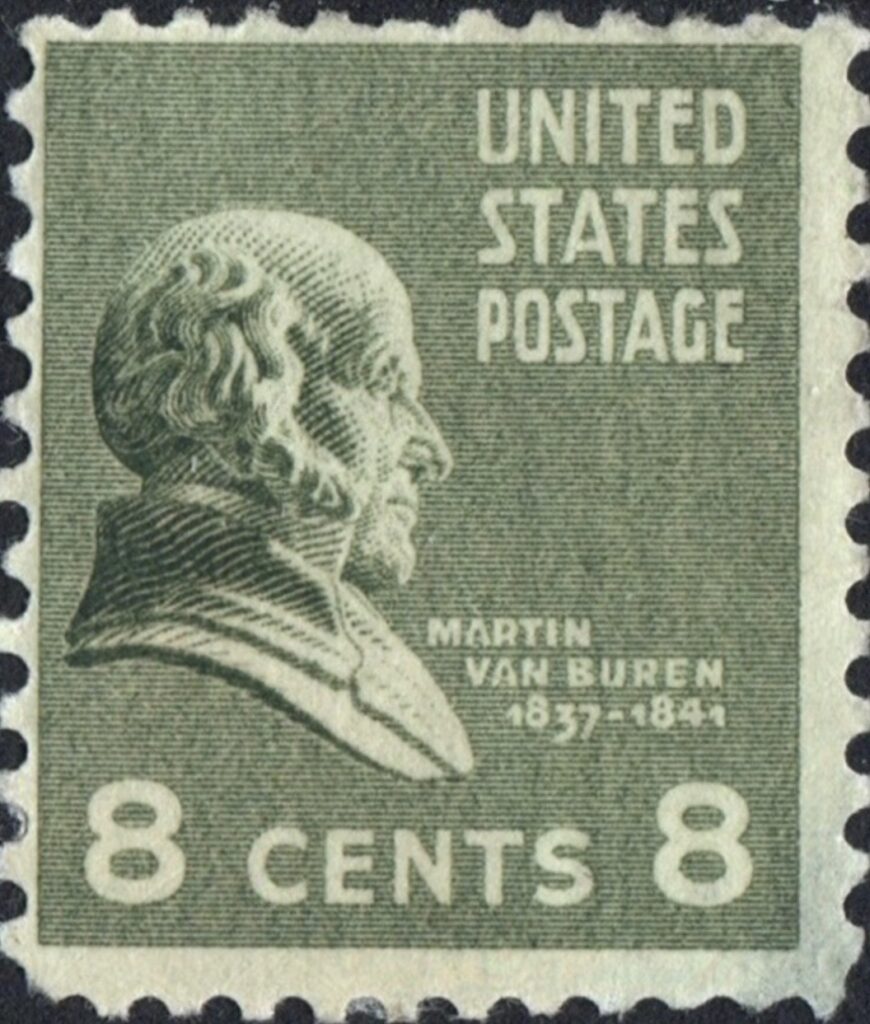
Poinsett was appointed by President John Quincy Adams to served as the first ambassador to the newly independent Republic of Mexico. He later was serve as President Martin van Buren’s Secretary of War.
Poinsett would serve until 1829, and like his time in Chile, his tenure was not without controversy — he was accused of interfering in Mexican domestic politics, and his name eventually became associated with undue foreign influence.
The Spanish word poinsettismo was coined in Mexico to describe meddlesome outside interference in a country’s internal affairs, a dubious linguistic honor.
The Flower He Brought Home
Yet it is not politics but botany for which Poinsett is best remembered today. During his time in Mexico, he became captivated by a striking shrub he encountered growing in the wild, particularly in the southern regions of the country.
The plant produced vivid scarlet bracts — modified leaves often mistaken for petals — surrounding small, inconspicuous yellow flowers at the center. Poinsett, who maintained greenhouses at his South Carolina plantation and had a genuine passion for horticulture, clipped some specimens and sent cuttings back home around 1828.
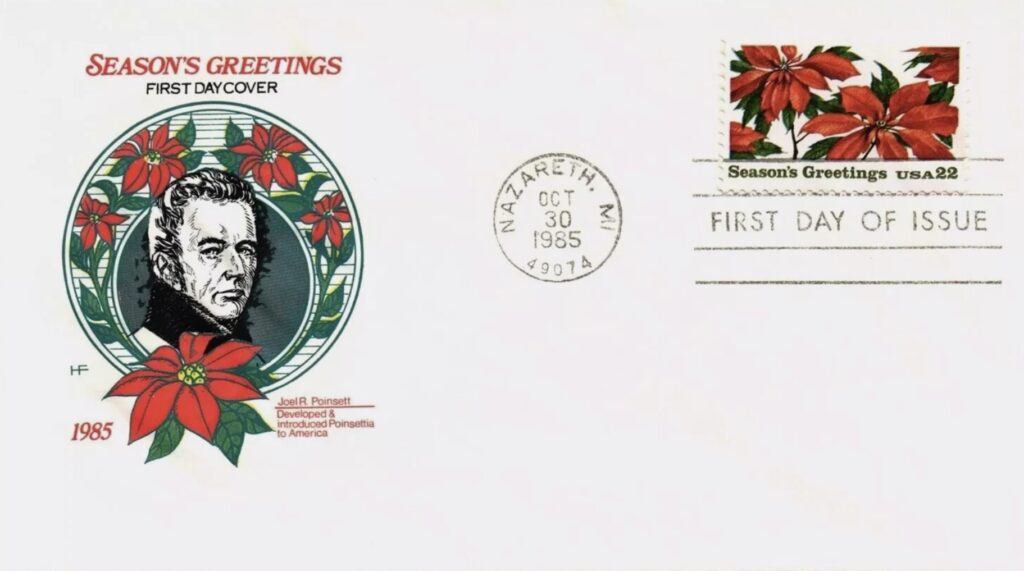
The issuing post office for the poinsettia stamp was Nazareth, Michigan, chosen, it seems, simply because it shared the name of the city in Israel associated with the birth of Christ. The other Christmas stamp that year was the Genoa Madonna, an enameled terra cotta by Florentine sculptor Luca Della Robbia (1400-1482). It reposes at the Detroit Institute of Arts, and thus the FDC issue for that stamp was in Detroit.
From South Carolina, the plant spread to botanists, nurserymen, and eventually the broader American public. The Philadelphia nurseryman Robert Buist is believed to have been among the first to sell the plant commercially in the United States.
By the late 19th and early 20th centuries, it had become firmly associated with the Christmas season, and by the mid-20th century it was a commercial juggernaut. Today, poinsettias are the best-selling potted plant in the United States, with tens of millions sold in the six weeks before Christmas each year.
La Flor de la Nochebuena
In Mexico, the plant had been known and cherished long before Poinsett arrived. The Aztecs called it cuetlaxochitl, prizing it both as a source of reddish-purple dye and as a fever remedy. After Spanish colonization, the plant became deeply woven into the fabric of Mexican Christmas tradition. According to one website, the Aztec name meant “mortal flower that perishes and withers like all that is pure.”
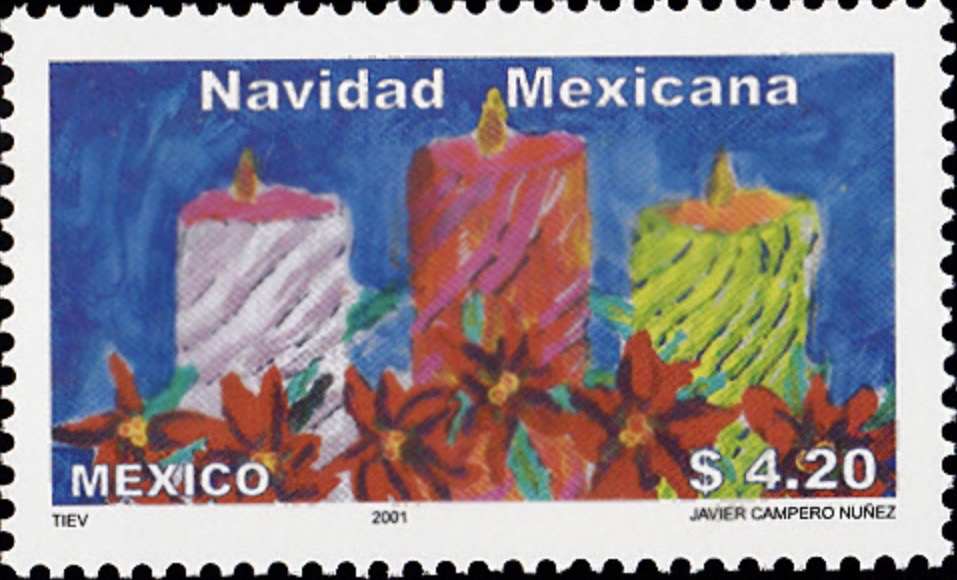
Mexicans call the poinsettia La Flor de la Nochebuena — the Flower of Christmas Eve. A beloved legend tells the story of a poor young girl named Pepita (sometimes called María) who, on her way to Christmas church services, had no gift to offer the Christ child.
An angel, or in some versions a kind companion, encouraged her to gather weeds from the roadside. When she placed them before the altar, they burst into brilliant red blooms. The miracle gave the flower its spiritual significance, and today La Flor de la Nochebuena is used extensively in Mexican Christmas celebrations, church decorations, and holiday festivals throughout December.
A Lasting Legacy
Joel Poinsett died in 1851, having also served as U.S. Secretary of War under President Martin Van Buren. He was a founding member of the National Institute for the Promotion of Science, a precursor to the Smithsonian Institution.
He was, by any measure, a significant figure in early American public life. Yet history has a gentle way of reducing complex men to a single footnote, and Poinsett’s footnote blooms in red and green every winter — beautiful, ubiquitous, and utterly inescapable.
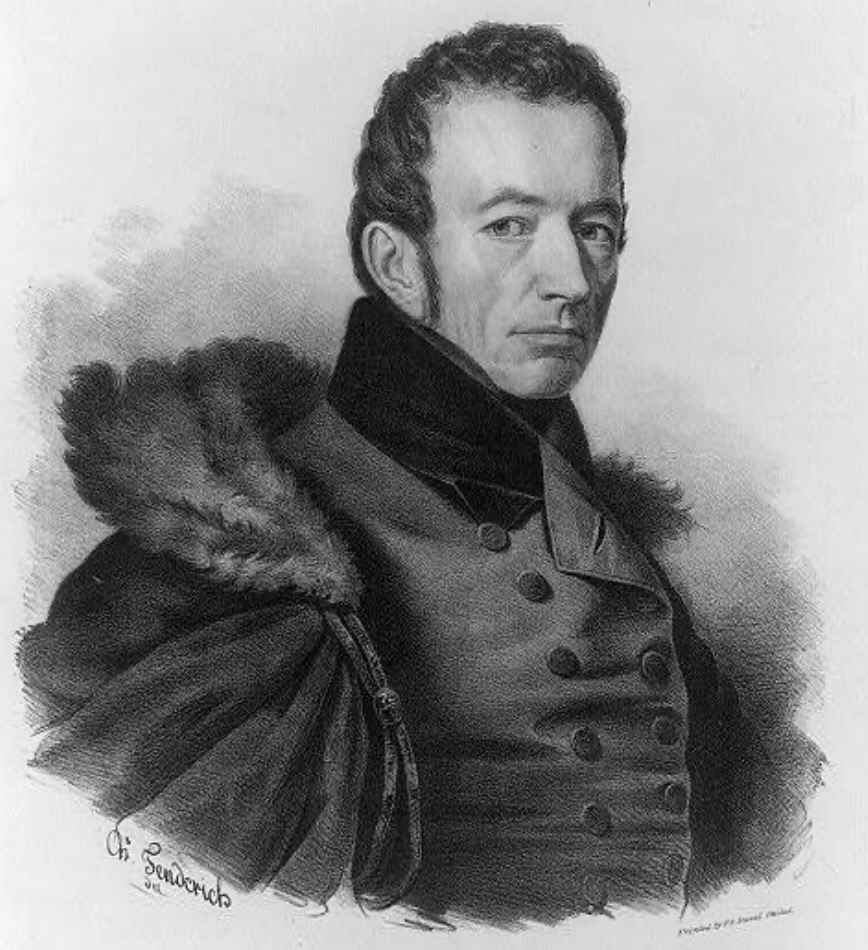
A portrait of Poinsett when he was Secretary of War, from the Library of Congress.