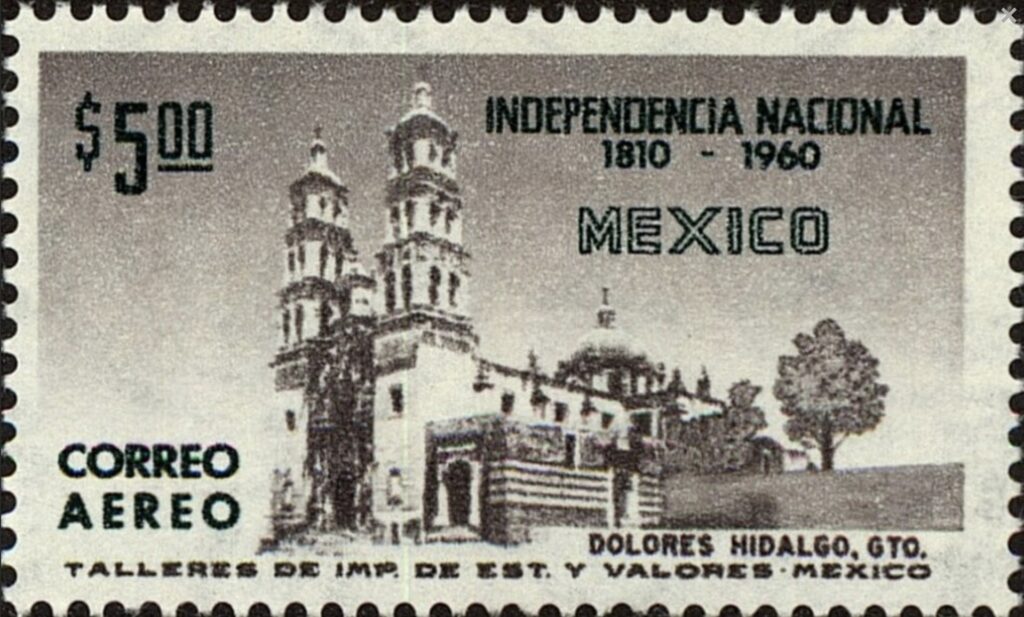
In the predawn darkness of September 16, 1810, a church bell rang out across the small town of Dolores in central Mexico. The man pulling the rope was a 57-year-old Catholic priest named Miguel Hidalgo y Costilla, and what he was about to say to the sleepy parishioners who came stumbling toward the sound would ignite one of the most consequential rebellions in the history of the Americas.
A Priest Unlike the Others
Miguel Gregorio Antonio Ignacio Hidalgo y Costilla was born on May 8, 1753, and would come to hold the unique distinction of being a father in three senses of the word: a priestly father in the Roman Catholic Church, a biological father who produced illegitimate children in violation of his clerical vows, and ultimately the father of his country.
Both his parents were of pure Creole — or criollo — descent, meaning they were of Spanish blood but born in the New World. This distinction mattered enormously in colonial Mexico, where a rigid social hierarchy placed native-born Spaniards (peninsulares) at the top, followed by criollos, then mestizos of mixed heritage, and finally the indigenous population at the bottom.
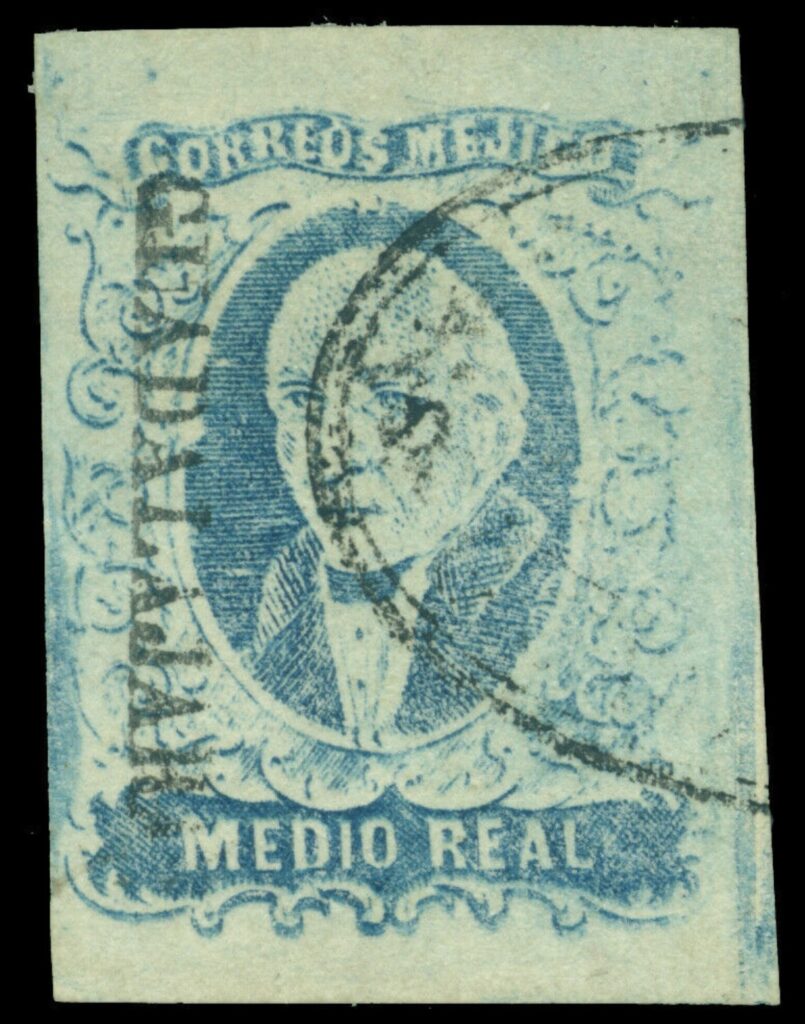
When it comes to postage stamps, Hidalgo is the George Washington of Mexico. His image graced the nation’s first stamp and has been on a total of 330, mostly in Mexico, according the the online catalog Colnect.
Many years ago I was able to acquire a prime specimen of Mexico’s first stamp, in pristine condition with boardwalk margins, for a minor sum. Since that time, it has been stolen.
So the stamp illustration here is from the website of stamp stockbook. If you’re interested, even today, this historic stamp retails for only $70.
Criollos like Hidalgo could be educated and even prosperous, but they were barred from the highest positions of political and ecclesiastical power, a source of deep and enduring resentment.
Hidalgo was intellectually restless and academically gifted. He became a professor at the Colegio de San Nicolás Obispo in Valladolid, but was influenced by Enlightenment ideas, which contributed to his ouster in 1792.
He eventually took up a parish post in the town of Dolores, where he threw himself into improving the lives of his impoverished congregation. He tried to help the poor by showing them how to grow olives and grapes, but in New Spain, growing these crops was discouraged or prohibited by colonial authorities to prevent competition with imports from Spain.
Even his good-faith efforts to help his parishioners were blocked by the colonial system. The injustice was not lost on him.
The World That Made the Revolution
Hidalgo did not arrive at rebellion in isolation. The wider world was shifting in ways that made old empires seem newly vulnerable. In 1808, Spain was invaded by French troops, and Napoleon forced the abdication of King Ferdinand VII in favor of the French emperor’s brother, Joseph Bonaparte.
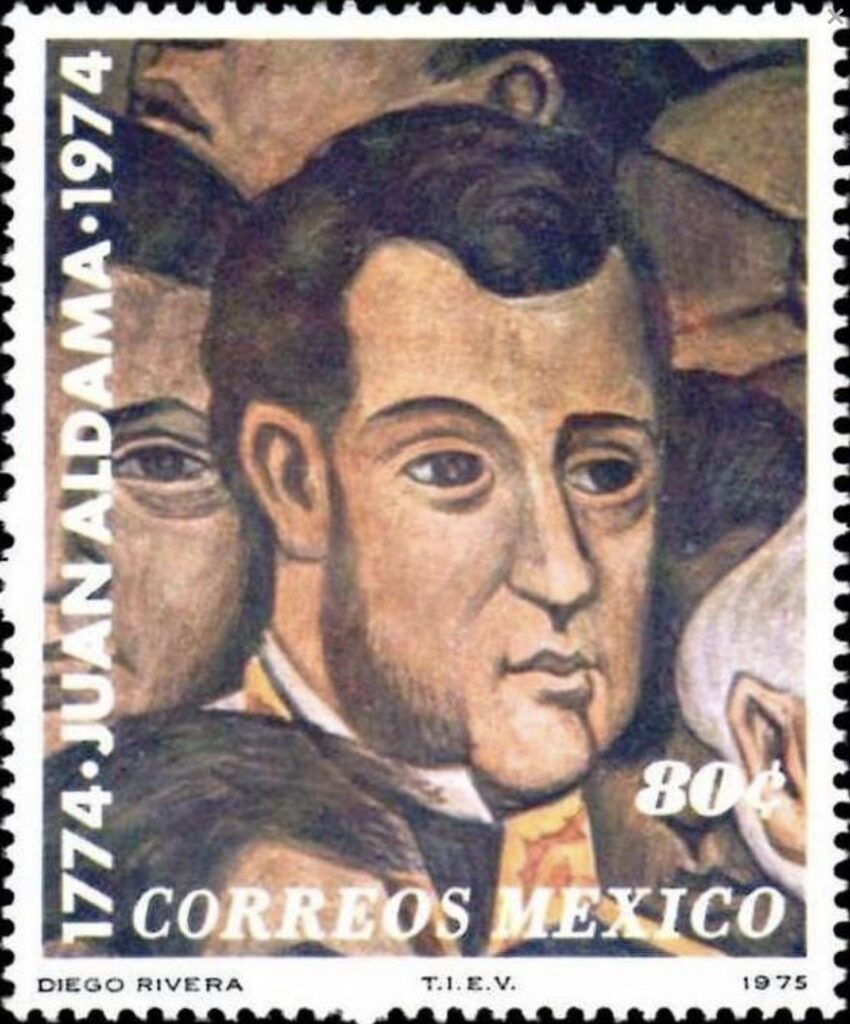
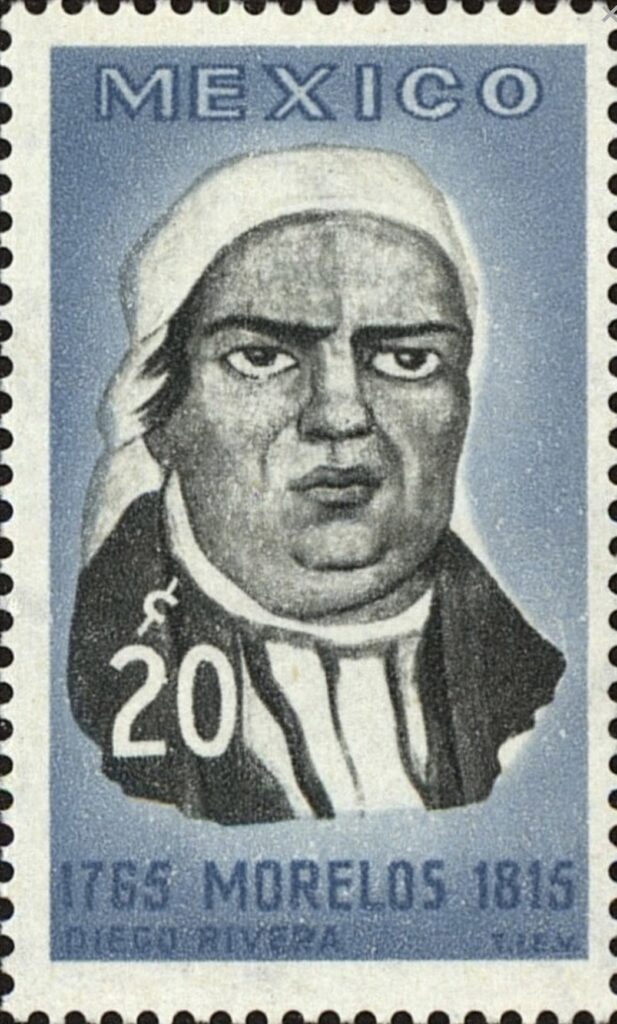
Two of Hidalgo’s fellow travelers in rebellion, Juan Aldama and José Maria Morelos. Both portraits are from paintings from the most famous of Mexican artists, Diego Rivera.
This sudden power vacuum sent shockwaves through the Spanish colonies. Who was the rightful authority now? Though Spanish officials in Mexico were reluctant to oppose the new king, many Mexicans formed secret societies — some supporting Ferdinand, others advocating independence from Spain altogether.
Hidalgo fell in with the latter camp. The “Conspiracy of Querétaro” began forming cells in other Spanish cities in the north, including Celaya, Guanajuato, and San Miguel el Grande. Among his co-conspirators was Ignacio Allende, a military officer who had grown disillusioned with Spanish rule, and Josefa Ortiz de Domínguez, the wife of a local official, who would play a crucial role in the plot’s survival. Hidalgo joined the conspiracy, and with Allende vouching for him, rose to being one of its leaders.
The group planned a carefully coordinated uprising for later in the year. But the colonial authorities were watching, and time ran out faster than anyone expected.
The Plot Exposed
In September 1810, Spanish authorities learned of the group’s plot to incite a rebellion. On September 13, they searched the home of Emeterio González in the city of Querétaro, where they found a large supply of weapons and ammunition. Arrests began almost immediately. The conspiracy, it seemed, was finished before it had started.
But the conspirators had a friend in an unlikely place. The corregidor Domínguez cracked down, but his wife Josefa was able to warn Allende, who then alerted Hidalgo. With the authorities closing in, Hidalgo faced a stark choice: flee, surrender, or strike now, before they were ready, before the army was organized, before the plan was complete.
He chose to strike.
The Grito
Around 2:30 in the morning on September 16, 1810, Hidalgo ordered the church bells to be rung and gathered his congregation. Flanked by Ignacio Allende and Juan Aldama, he addressed the people in front of his church, urging them to revolt. His speech became known as the “Cry of Dolores.”
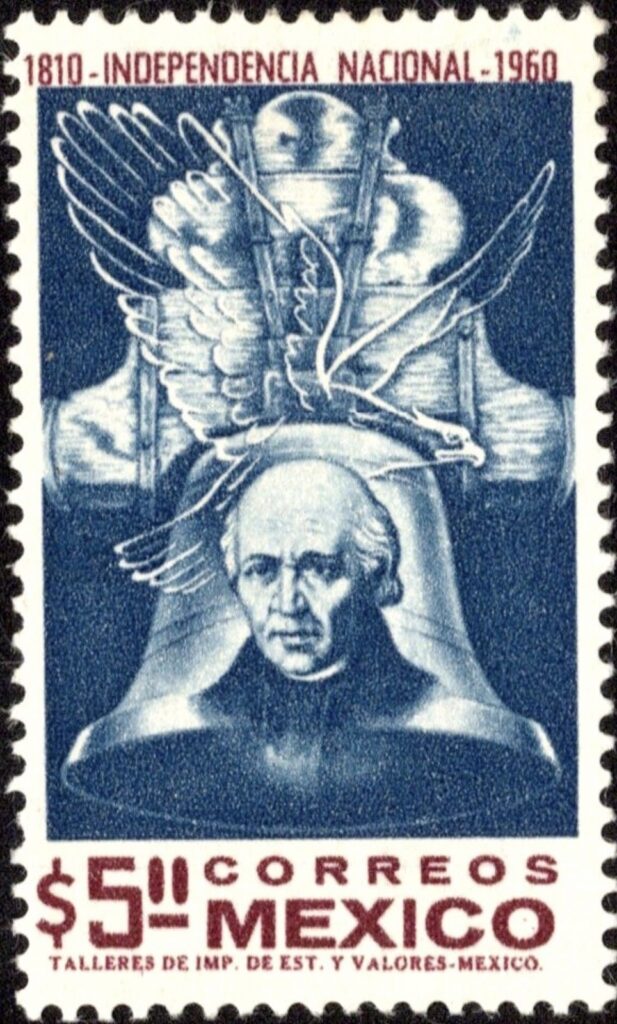
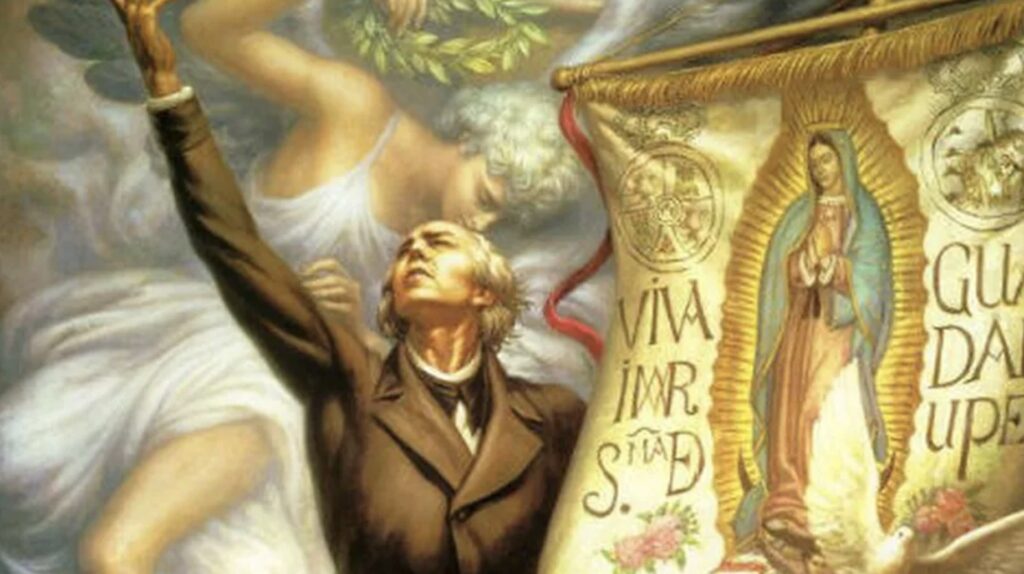
The 1960 stamp issued during the 150th anniversary of Mexico’s march toward independence features Hidalgo and the fateful ringing of the church bell to signal the beginning of the revolution.
The painting shows the banner of the Virgin of Guadalupe, Mexico’s patroness, who was invoked by Hidalgo is gathering his supporters.
The exact text of this most famous of all Mexican speeches is not known, and a wide variety of reconstructed versions have been published, but he may have said, in essence: “Long live Our Lady of Guadalupe, death to bad government, death to the gachupines!” — gachupines being a pointed, pejorative term for the Spanish-born colonizers.
He called for the end of Spanish colonial rule, for racial equality, and for redistribution of land.
It was a remarkable act. A priest, standing before his congregation in the early morning dark, not preaching patience or heaven, but revolution — now, today, with whatever they had in their hands.
An Army of the People
What happened next astonished even Hidalgo. Attracting enthusiastic support from the Indian and mestizo population, he and his band of supporters moved toward the town of San Miguel. The crowd grew with every mile.
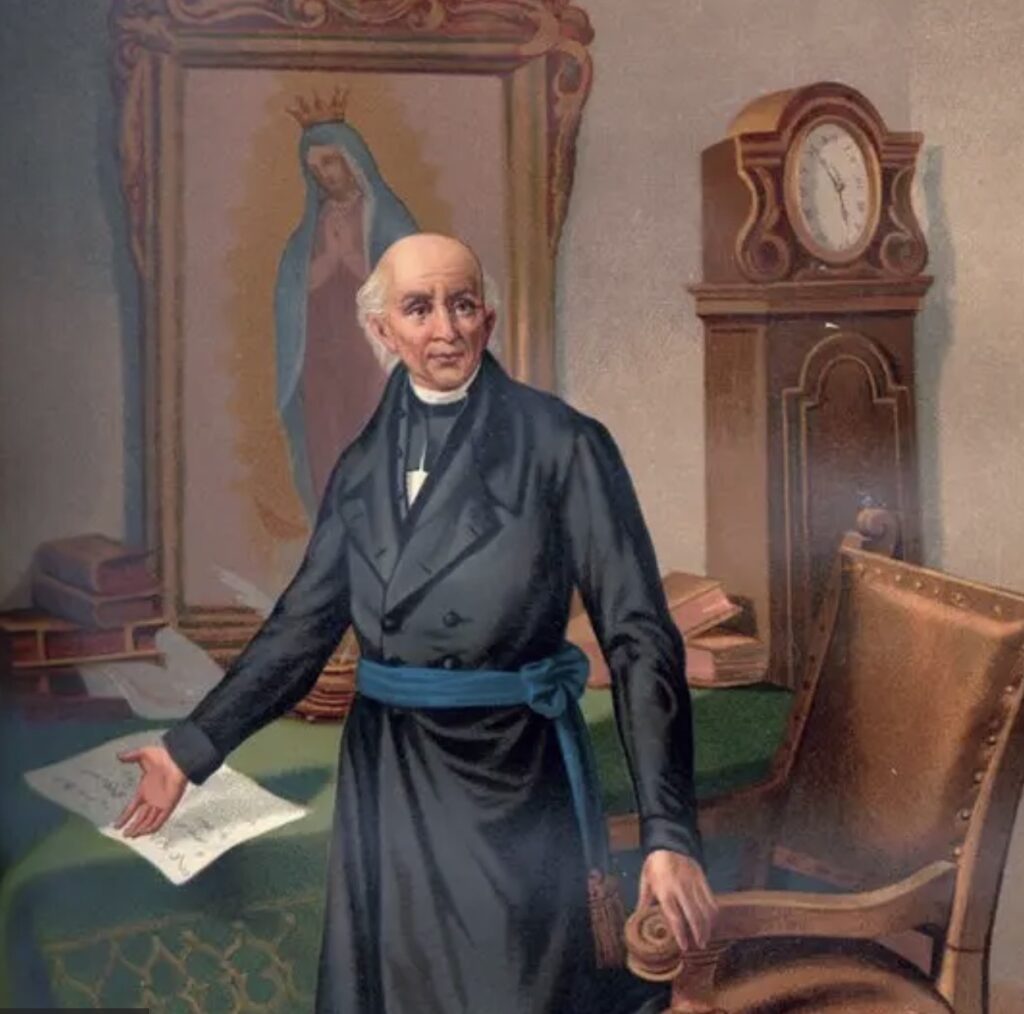
The Grito that Hidalgo shouted is not well documented, so there are varying versions. In many of them, he shouted cheers for the Virgin of Guadalupe. Many portraits of him include the Virgin.
Farmers, miners, laborers, and the desperately poor answered the call of the bell and the priest. The revolt was massive and not well organized. These were not trained soldiers. Many had no weapons beyond farm tools and improvised clubs. But their numbers and their fury gave them power that discipline alone could not have mustered.
Fearing arrest, Hidalgo had already ordered his brother Mauricio, as well as Allende and others, to free prison inmates in Dolores on the night of September 15, setting 80 free — the first of many bold strokes that swelled the insurgent ranks.
The rebel army encountered its first serious resistance at Guanajuato. After a fierce battle that took the lives of more than 500 Spaniards and 2,200 Indians, the rebels won the city. By October, the rebel army, now 80,000 strong, was close to taking Mexico City.
The speed of the movement’s growth was staggering. Within weeks, a parish priest with a bell had conjured an army.
The Cost of the Cry
Yet the movement carried within it the seeds of its own early destruction. Hidalgo inspired tens of thousands of ordinary men to follow him, but did not organize them into a disciplined fighting force or have a broad military strategy.
Fellow insurgent leader Ignacio Allende said of him: “Neither were his men amenable to discipline, nor was Hidalgo interested in regulations.” The army’s violence shocked even some of its supporters, and Hidalgo’s momentum eventually stalled.
Hidalgo, fearful of unleashing the army on the capital city, hesitated, then retreated to the north. It was a turning point from which he never recovered.
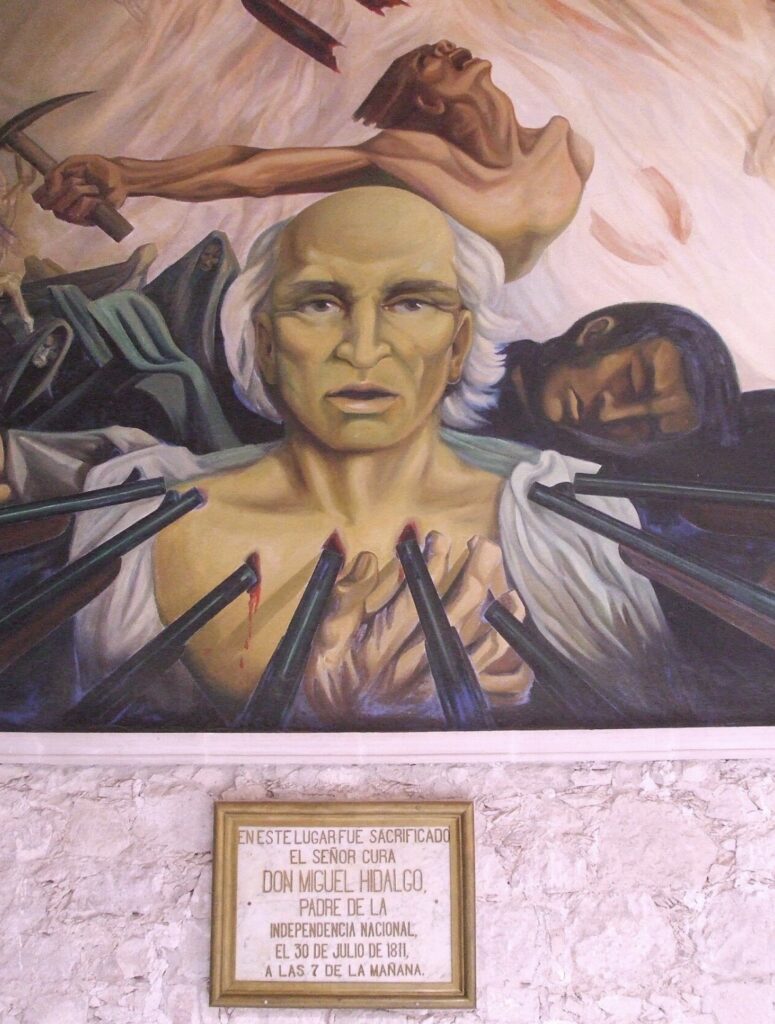
This is part of the mural in the government building in Chihuahua city showing the execution of Hidalgo. Significantly, the image behind him is the breaking of chains. The murals are by Aarón Piña Mora, who received the commission to paint them in 1959. The building is replete with his murals, telling national and local history, and they weren’t completed until the 1990s. I make it a point to take some time with these paintings and their stories on each visit I make to the city.
Hidalgo was captured by royalist forces in Chihuahua city, defrocked from the priesthood, and executed by firing squad in July 1811. He was beheaded by the civil government as punishment for revolting, and his head was displayed in Guanajuato, where he and his army had been charged with causing a massacre. He was 58 years old and had been in open rebellion for less than a year.
The Flame He Passed
His death did not end the struggle. Another priest, José María Morelos, took up the mantle of revolution, sending home anyone from the first army without a weapon and a horse, building a leaner and more effective force. In 1815, he too would be executed by firing squad.
The war ground on for another decade, through phases of guerrilla resistance, political maneuvering, and shifting alliances, until Mexico finally achieved independence in 1821.
Hidalgo has been hailed as the Father of the Nation even though it was Agustín de Iturbide, not Hidalgo, who became the first head of state of Mexico in 1821. Yet it is Hidalgo whose face fills the murals, whose name adorns a state and countless streets, and whose bell still rings.
Every year on the night of September 15, the president of Mexico shouts a version of the Grito from the balcony of the National Palace: “Viva México! Viva la Independencia! Vivan los héroes!” The ceremony is broadcast throughout the country and repeated in smaller scale in cities and towns everywhere.
A priest rang a bell in the dark, and an empire began to fall.