The man who dreamed of liberating a continent — and nearly succeeded
In the sweeping cordillera of the Andes, across tropical lowlands and high plateaus, one name reverberates through the history of an entire hemisphere: Simón Bolívar. Soldier, statesman, philosopher, and liberator, Bolívar dedicated his life to breaking the colonial yoke Spain had fastened around South America for nearly three centuries.
To this day, he remains one of history’s most consequential — and most contradictory — figures.
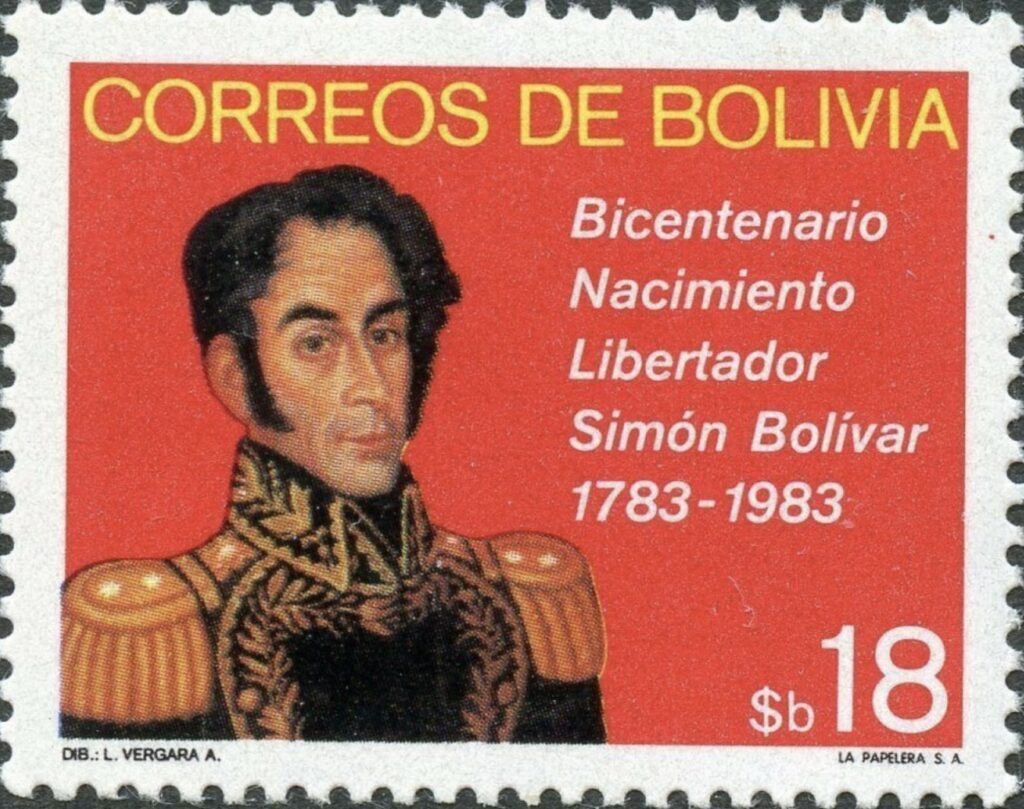
In 1983, his namesake nation issued this rather simple stamp honoring the great Liberator.
Born on July 24, 1783, in Caracas — then part of the Captaincy General of Venezuela — Simón José Antonio de la Santísima Trinidad Bolívar y Palacios came into the world with considerable privilege. His family was among the Creole, or criollo, elite, landowners of Spanish descent who had grown wealthy in the New World but were systematically excluded from the highest echelons of colonial power. That tension — wealth without political authority — would shape his worldview profoundly.
Orphaned by age nine, Bolívar inherited a vast fortune and was educated by a series of private tutors, the most influential being Simón Rodríguez, an eccentric intellectual who introduced him to Enlightenment thinkers — Locke, Rousseau, Voltaire, Montesquieu.
In 1799, he sailed to Europe, where he witnessed the aftermath of the French Revolution and the spectacle of Napoleon’s rise. At the Sacred Hill in Rome in 1805, standing alongside Rodríguez, he reportedly made a vow to liberate his homeland. He was 22 years old.
The campaigns that changed a continent
Bolívar’s path to liberation was neither swift nor clean. His first military campaigns, beginning around 1810 in the chaotic wake of Venezuela’s declaration of independence, ended in failure and exile. He was forced to flee to New Granada twice before circumstances — and his own relentless willpower — turned the tide. What followed was among the most audacious military campaigns in the modern era.
In 1819, Bolívar led roughly 2,500 soldiers on a crossing of the Andes in the dead of winter — a march so brutal, so seemingly impossible, that historians still struggle to convey its full horror. Soldiers died of hypothermia and altitude sickness; horses collapsed; supplies dwindled. Yet Bolívar emerged from the mountains and, within days, delivered a stunning defeat to royalist forces at the Battle of Boyacá on August 7, 1819. Colombia was liberated. It was a turning point that made everything else possible.
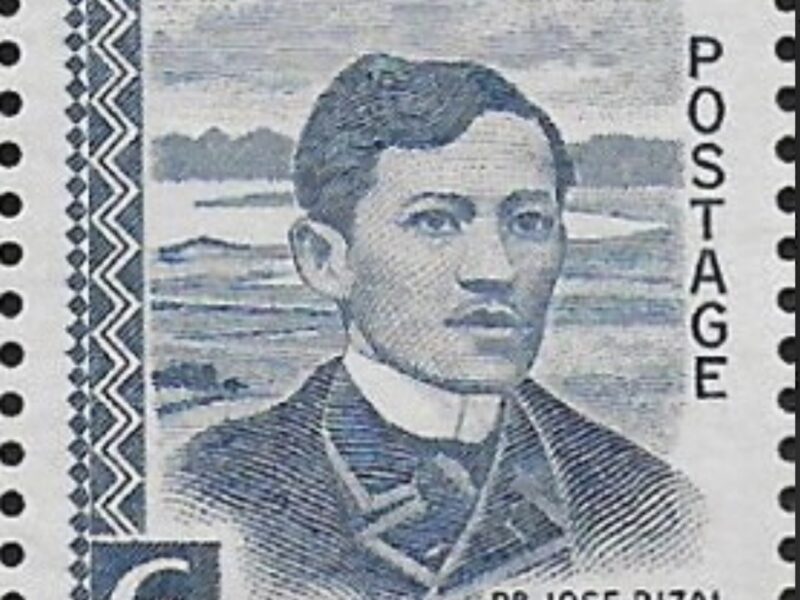
In 1969, Colombia commemorated the sesquicentennial of the Battle of Boyacá, which liberated that nation. This was not the end of the fighting, but it would lead to more victories for the revolutionary forces.
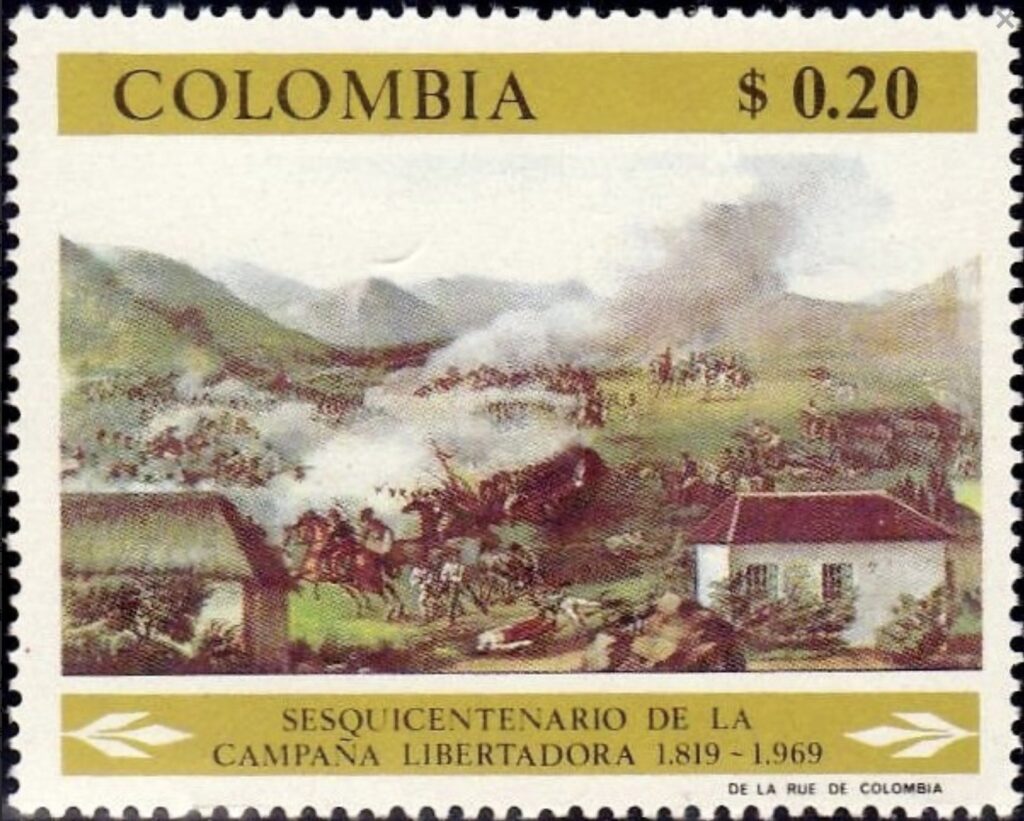
The victories accumulated: Carabobo in 1821 secured Venezuelan independence; Pichincha in 1822 freed Ecuador; Junín and Ayacucho in 1824 — the latter fought by his brilliant general Antonio José de Sucre — ended Spanish rule in Peru and Upper Peru (today’s Bolivia), which was named after him.
The nations whose liberation was brought about by Bolívar were: Venezuela, Colombia, Peru, Bolivia, Ecuador and Panama.
The dreamer of Gran Colombia
For Bolívar, military liberation was only half the project. He harbored a grand political vision: a unified Spanish-speaking republic stretching from Venezuela to Peru, what he called Gran Colombia. This federation, he believed, was the only way for newly independent nations to resist foreign domination — from Spain, from Britain, from the emergent United States — and to build stable, lasting republics.
He was profoundly skeptical of raw democracy. Unlike the liberal federalists who surrounded him, Bolívar feared that an uneducated, deeply divided population would descend into anarchy without strong centralized leadership. His 1819 Angostura Address and his proposed Bolivian Constitution — which included a life-long presidency — reflected this fear. Critics called him a tyrant in waiting. Supporters called him a realist.
The collapse of the dream
Gran Colombia fractured almost as soon as it was formed. The distances were enormous, the regional identities fierce, and the personal ambitions of local caudillos impossible to contain. His trusted general Páez led Venezuela in separating. Ecuador followed. Bolívar survived an assassination attempt in Bogotá in 1828 — shielded, legend has it, by his companion Manuela Sáenz, who held off his attackers long enough for him to escape. He assumed dictatorial powers to hold things together, but it only deepened resentment.
Exhausted, ill with tuberculosis, and disillusioned, Bolívar resigned the presidency in 1830 and prepared to sail for exile in Europe. He never made it. On December 17, 1830, at the age of forty-seven, he died at a hacienda near Santa Marta, Colombia — penniless and largely forgotten by the continent he had spent his life liberating.
Legacy; hero, myth and mirror
Death, as it often does with great figures, transformed Bolívar into something larger than any living man could sustain. Within a generation, he was being lionized across Latin America. Today, his name is invoked everywhere from Caracas to Bogotá to La Paz — on currency, in constitutions, in revolutionary slogans, and in the names of nations and mountains and squares without number.
Venezuela’s Hugo Chávez rebranded his socialist project the “Bolivarian Revolution.” Across the political spectrum, leaders of all stripes have claimed his mantle, which tells you something important: Bolívar was too complex, too contradictory, too human to belong to any single ideology.
He believed in liberty and practiced authoritarianism. He freed millions and kept enslaved people on his own estates for years before finally abolishing slavery in Gran Colombia. He wanted unity and achieved fragmentation.
What remains, beyond the myth, is something genuinely stirring: a man who looked at a continent under the boot of empire and, with astonishing personal audacity and almost irrational tenacity, decided to change it. He didn’t fully succeed. But the world he helped create — imperfect, fractious, and free — bears his unmistakable mark.