When most people think of Audrey Hepburn, they picture a woman of effortless elegance — Holly Golightly draped in Givenchy, or Princess Ann charming Gregory Peck through the streets of Rome. What far fewer people know is that before the cameras ever found her, Audrey Hepburn was a teenage girl living under Nazi occupation in the Netherlands, quietly risking her life to fight back.
Her wartime story remained largely untold for decades — partly because Hepburn herself rarely spoke of it, and partly because history tends to overlook the small, unglamorous acts of courage that quietly sustain a resistance movement. But her story deserves to be told. It is one of extraordinary bravery at a young age, against one of the most murderous regimes the world has ever seen.
A Childhood Overtaken by War
Audrey Hepburn was born in Brussels in 1929. When the war broke out in 1939, she was just ten years old. Her mother, the Dutch Baroness Ella van Heemstra, moved the family to Arnhem in the Netherlands, believing the country might remain neutral — as it had during World War I. It was a hope that did not survive the spring of 1940, when Nazi Germany swept through the Low Countries and the Netherlands fell in just five days.
The occupation brought immediate cruelty. Audrey later described the horror of watching Dutch men lined up against walls and shot in public. She witnessed Jewish families — neighbors, acquaintances — being herded onto train cars and shipped eastward. “Don’t discount anything awful you hear or read about the Nazis,” she said years later. “It’s worse than you could ever imagine.”
Her family’s sympathies, which had once included fascist leanings — her parents had even met Hitler in 1935 — were shattered when the war became personal. In 1942, Audrey’s uncle Otto, a respected judicial official, was arrested by the Nazis for an act of resistance. On August 15 of that year, he was executed in a mass shooting and his remains dumped in a mass grave.
Her half-brother Ian was deported to Berlin as forced labor. Another half-brother went into hiding. Any lingering neutrality in the van Heemstra household died with Otto.
Audrey’s mother changed her daughter’s name to Edda van Heemstra — a more Germanic-sounding identity — to shield her from scrutiny. The family relocated from Arnhem to the smaller village of Velp, where Audrey’s grandfather lived. It was there that a teenage girl began looking for ways to fight back.
Dancing in the Dark: The Zwarte Avonden
Audrey had spent years studying ballet, and by her early teens she had become something of a local celebrity in Arnhem’s dance world. It was this talent that drew the attention of Dr. Hendrik Visser ‘t Hooft, a Christian theologian and committed anti-fascist who was one of the key organizers of the local Dutch resistance network.
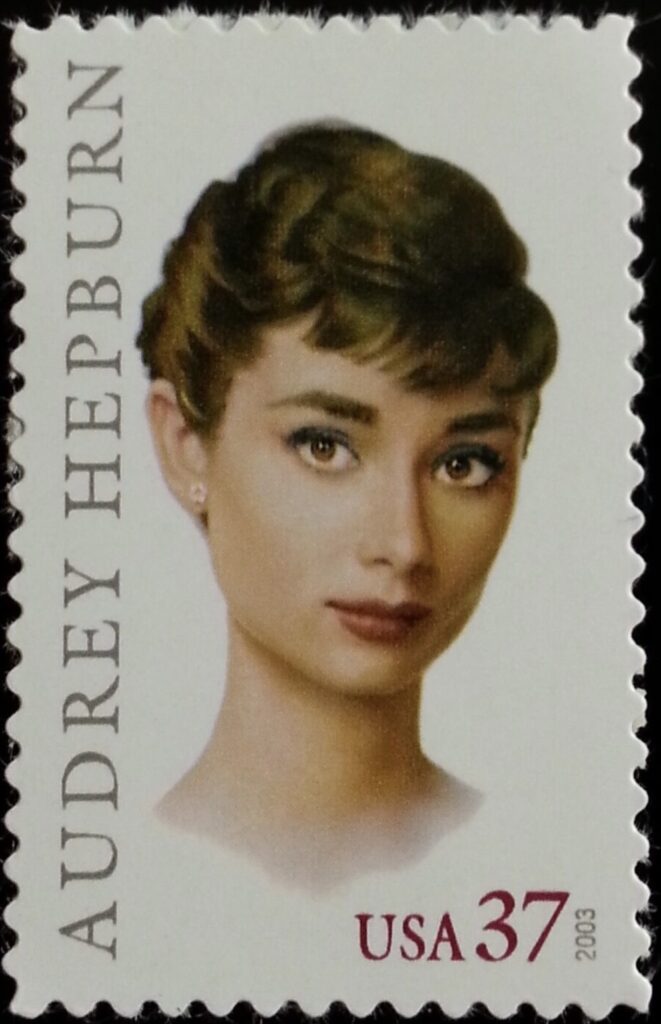
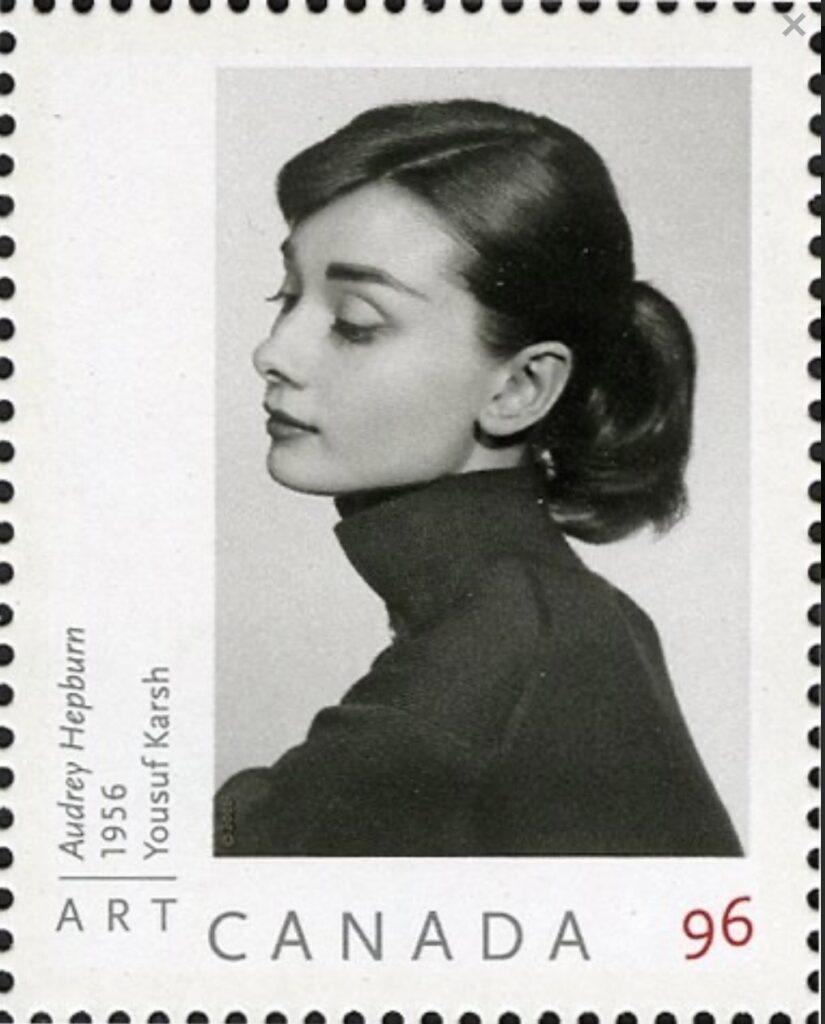
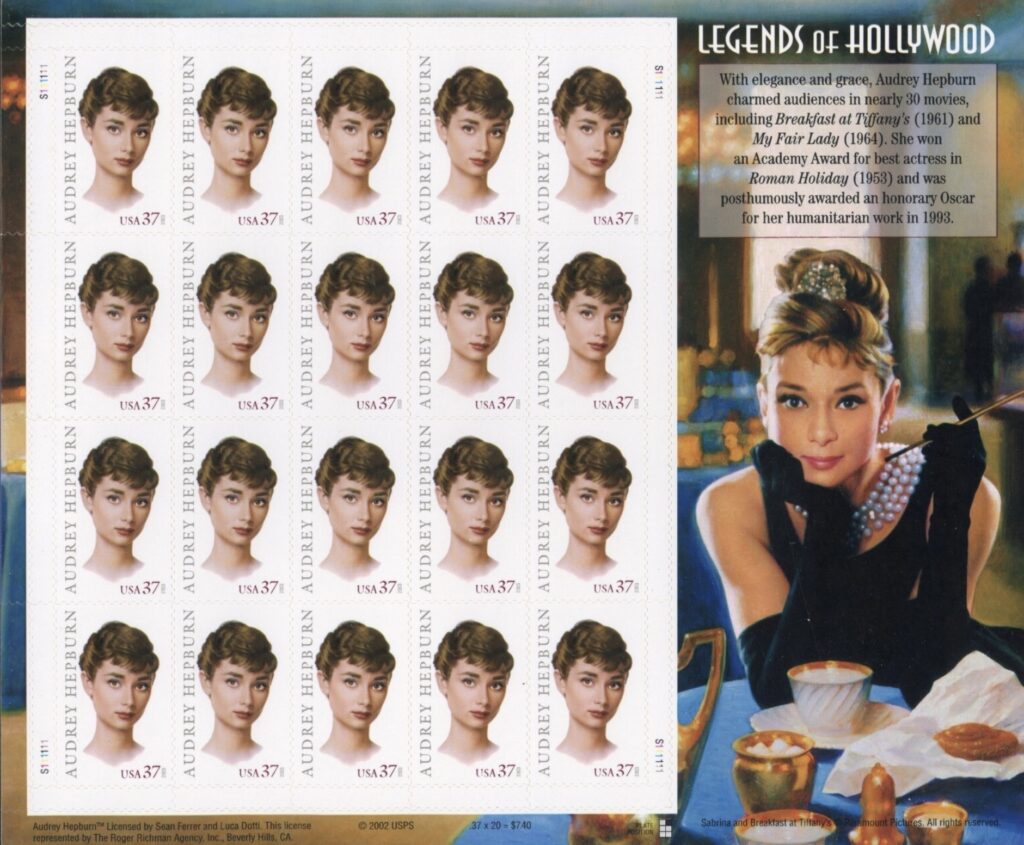
A larger view of the 2003 USA stamp honoring Audrey Hepburn. With it is a Canadian stamp from 2008 honoring photographer Yousuf Karsh and featuring his portrait of Audrey.
Dr. Visser ‘t Hooft had helped establish what were known as the zwarte avonden — “black evenings.” These were secret, invitation-only performances held in private homes, with windows covered and curtains blacked out to prevent detection. Musicians and dancers who had been forced out of mainstream Dutch cultural life by the Nazi-controlled artists union used these underground events to earn money — money that then flowed directly to the resistance.
Audrey began performing at these clandestine recitals in 1944, at the age of 15. She choreographed her own dances, a friend played piano accompaniment, and her mother sewed her costumes. The audiences sat in tense, reverent silence — no applause, for fear of alerting German soldiers outside.
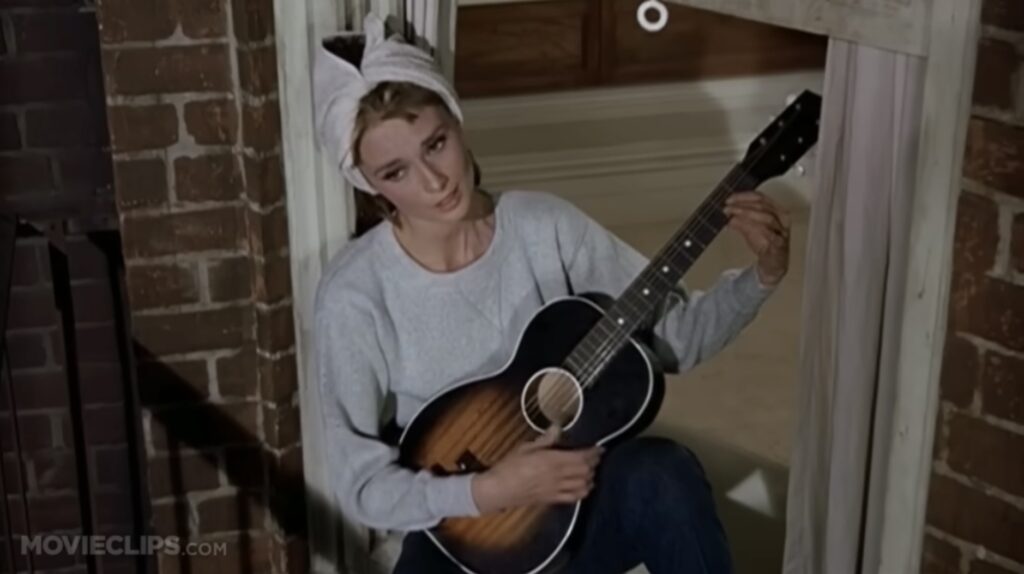
A screen grab from the movie Breakfast at Tiffany’s, with Audrey performing Moon River. One of the studio executives wanted to dub another’s voice over the song, but Audrey wanted to keep her own voice in the movie. The executive lost. She was vindicated: Henry Mancini won the Oscar for Best Score and Johnny Mercer for the tune. (One of the comments on this YouTube clip: “Audrey Hepburn is the only person who can wear jeans, a sweater and a towel in her hair and still look classy.”)
When the performance ended, money was collected and handed to the underground. “Afterwards, money was collected and given to the Dutch Underground,” Audrey later confirmed. The silence that greeted her dancing — so different from the applause she would later receive on Broadway and in Hollywood — was itself a form of respect, and of shared defiance.
Some of the funds raised went directly to feeding Jewish families in hiding. Dr. Visser ‘t Hooft was sheltering hundreds of Jews in Velp throughout the war, and Audrey served as a go-between — delivering messages to the families protecting them, carrying information that could not safely be put into writing.
A Courier in Wooden Shoes
Beyond the dance performances, Audrey served the resistance in another quiet but essential role: as a courier. Her youth worked in her favor. A teenage girl on a bicycle attracted far less suspicion from German soldiers than an adult man or woman. She was trusted to carry the Oranjekrant — the “Orange Paper,” an underground resistance newspaper — stuffed into her woolen socks inside her wooden shoes, cycling through the streets of Velp to deliver them.
She also delivered food and messages to downed Allied airmen who needed to be sheltered and, eventually, smuggled back to Allied lines. In the autumn of 1944, Operation Market Garden — the ambitious Allied attempt to cross the Rhine and cut through the Netherlands — collapsed at Arnhem, leaving hundreds of British paratroopers stranded behind enemy lines.
For approximately a week, Audrey and her family hid one of these Allied soldiers — a Red Devil paratrooper — in the cellar of their home. Audrey’s son Luca Dotti later recalled that she described the experience as terrifying and exhilarating all at once: the soldier was a stranger in uniform, a savior, a symbol of the liberation she desperately hoped was coming.
Sheltering an Allied soldier was an act that carried the death penalty under Nazi occupation. The family knew this. They did it anyway.
The Hunger Winter and Liberation
By the winter of 1944 to 1945, the situation in the Netherlands had become desperate. The Nazi regime, in retaliation for a Dutch railway strike meant to support the Allied advance, imposed a food and fuel embargo on the occupied country.
The result was catastrophic: the Hongerwinter, or “Hunger Winter,” during which some 20,000 Dutch civilians died of starvation. Audrey and her family, like millions of others, ate tulip bulbs to survive. When those ran out, they ate weeds. They huddled in the cellar of their home as bombs fell on their village.
The deprivations Audrey endured during those months left lasting marks on her body. Biographers have linked her famously slender frame, as well as health problems she experienced throughout her life, to the severe malnutrition she suffered during the Hunger Winter. It is a sobering reminder of the human cost behind the myth of her effortless beauty.
Liberation came on April 16, 1945, when Canadian forces rolled into Velp. Audrey, emerging from the cellar she had been sheltering in, heard the sudden silence where explosions had been and understood what it meant.
A Canadian soldier offered her a cigarette — her first ever. She accepted it, choked on the smoke, and never forgot the moment. She linked cigarettes for the rest of her life to the overwhelming joy of that morning, the day the war was over and she was finally free.
A Legacy of Quiet Heroism
After the war, Audrey and her mother moved to Amsterdam, where they lived for a time in an apartment above the editor who was working on the diary of Anne Frank — another Dutch girl whose story had unfolded in the same terrible years, with a far more devastating end.
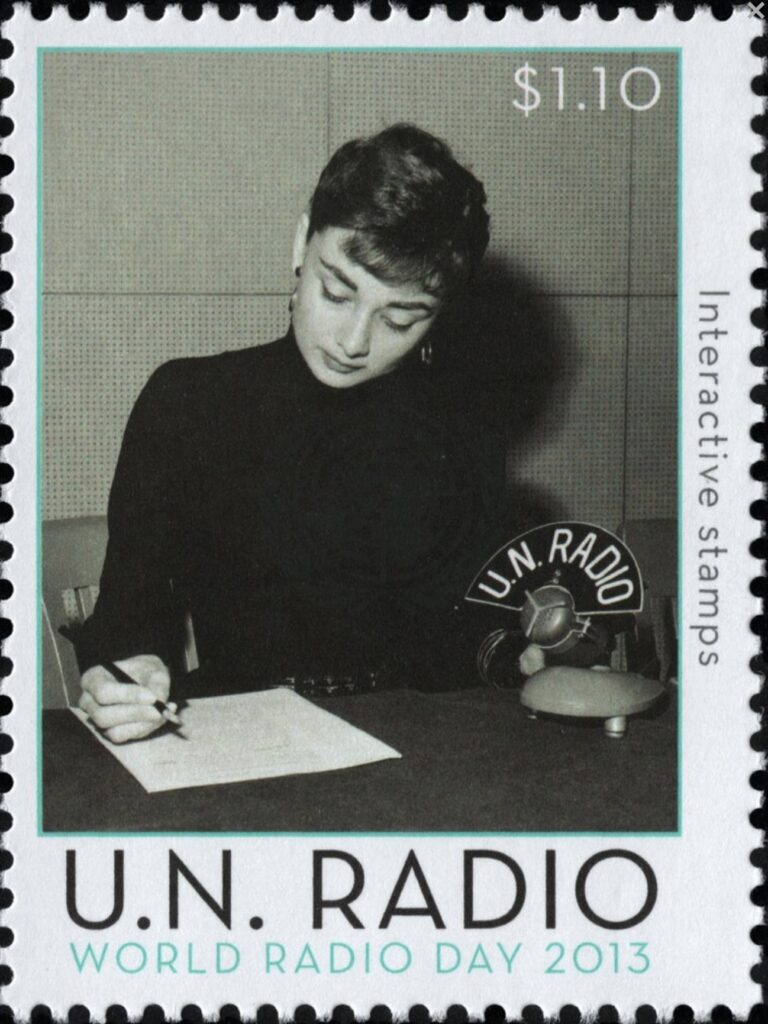
Later in life, Audrey Hepburn became a UNICEF Goodwill Ambassador, (from 1988 until her death in 1993), but as early as 1953, as this 2013 stamp portrays, she was doing work for that organization.
Audrey felt a deep kinship with Anne Frank. When Otto Frank personally approached her in the 1950s to play his daughter in the film adaptation, she declined. The story was too close, the grief too real. She simply could not perform it.
Hepburn went on to become one of the most celebrated actresses in Hollywood history, winning an Oscar, a Tony, an Emmy, and a Grammy in her career. But it is perhaps her later work as a UNICEF Goodwill Ambassador — traveling to the world’s most impoverished and war-ravaged regions from 1988 until her death in 1993 — that reveals how deeply her wartime childhood shaped her.
She had known hunger. She had known occupation. She had seen what the world’s indifference to suffering looked like from the inside.
For decades, Audrey rarely spoke in detail about her wartime activities. It was not false modesty — she genuinely did not see herself as a hero. She was, she said, just a girl trying to find some way to contribute. But that modesty is itself a form of grace.
She danced in darkened rooms, cycled through enemy-occupied streets with newspapers in her shoes, and sheltered a stranger in her cellar — not for recognition, but because it was the right thing to do.
The glamour came later. The courage came first.
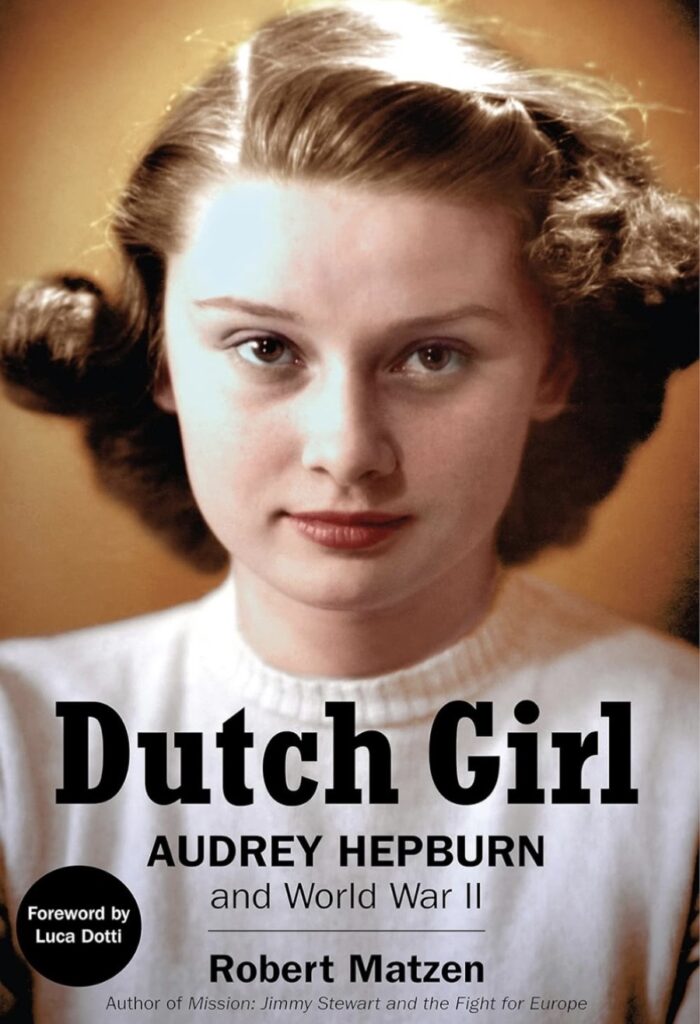
This book introduced me to Audrey Hepburn’s childhood in the Netherlands during World War II.
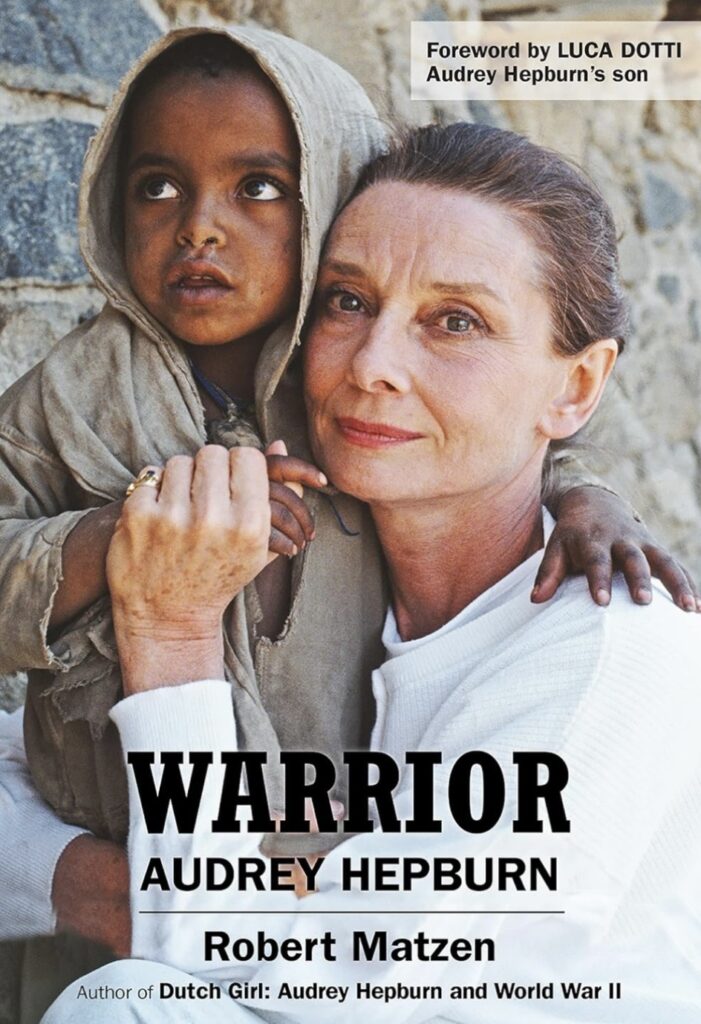
The author of Dutch Girl followed up with this book, covering later heroic activities, including her service to UNICEF.
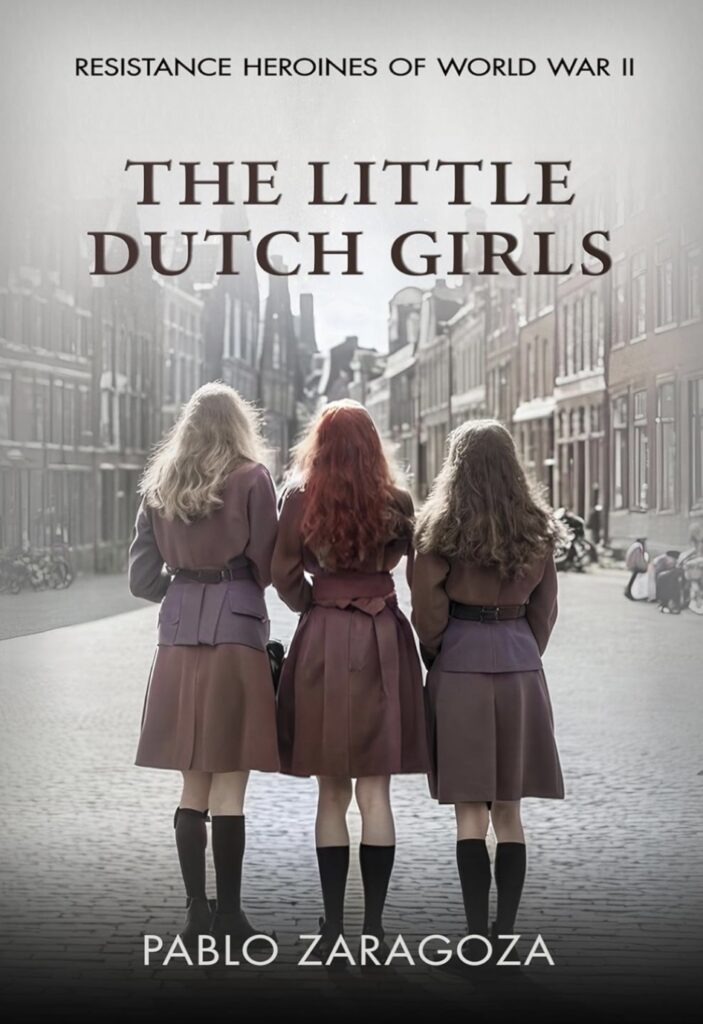
If you want a fictionalized — but very real — look at the Dutch Resistance during World War II, this is the book you want.