A Man Between Two Worlds
Mariano Azuela was born on January 1, 1873, in Lagos de Moreno, a small city in the state of Jalisco, Mexico — a place so provincial and dust-settled that it seemed designed to produce either poets or priests. Azuela became something rarer: a physician who wrote fiction, a liberal who fought in a revolution, and ultimately the man who gave that revolution its literary conscience.
He trained as a doctor at the School of Medicine in Guadalajara, graduating in 1899 and returning to Lagos de Moreno to practice. For more than a decade he split his days between sick patients and blank pages, publishing early novels that drew on the naturalist tradition of Émile Zola — social-realist stories about the grinding miseries of Mexican provincial life. He had talent, but not yet a subject worthy of it. History was about to fix that.
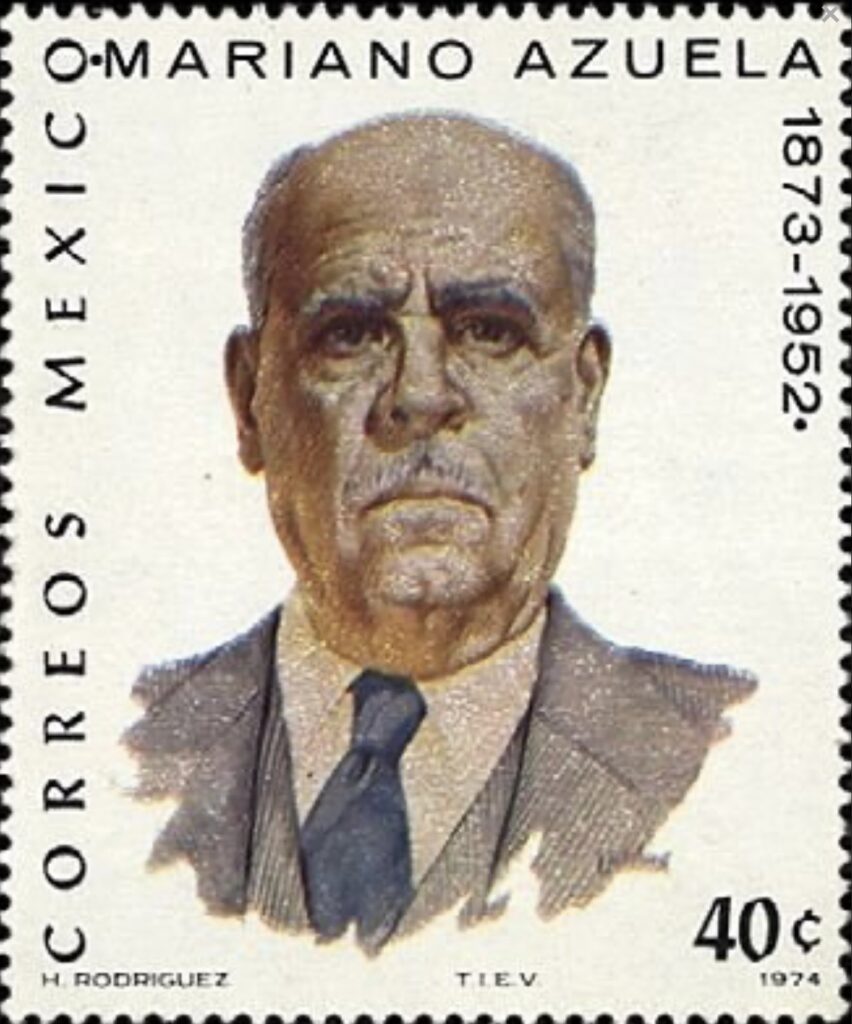
When Francisco Madero‘s uprising against the aging dictator Porfirio Díaz ignited in 1910, Azuela was 40 years old and consumed by two convictions: that the revolution was just, and that someone needed to bear witness to it honestly.
He aligned himself with the Maderista cause and later, after Madero’s assassination and the violent fracturing of the revolutionary movement, with the forces of Julián Medina, a general loyal to Pancho Villa. In 1914 and 1915, Azuela served as a military doctor accompanying Medina’s troops through the rugged terrain of Jalisco. He stitched wounds, administered quinine, and watched men die — and between surgeries and skirmishes, he took notes.
Writing on the Run
Los de abajo — rendered into English as The Underdogs — was written almost entirely in the field, scrawled in spare moments during an active military campaign. That origin story is not merely colorful biography; it explains everything about the novel’s texture.
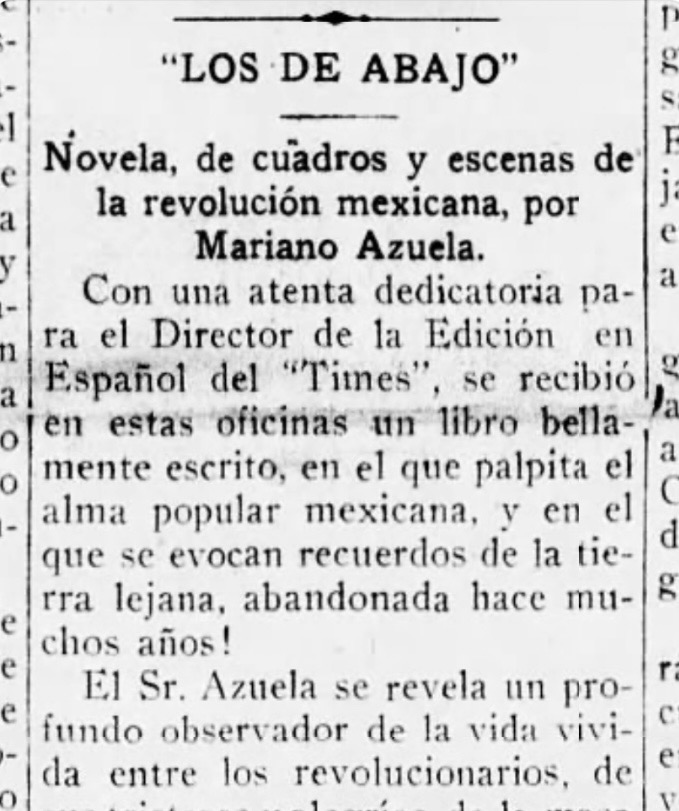
I don’t have access to El Paso del Norte, but Azuela apparently also tried to pique the interest of the Spanish language editors at the El Paso Times.
The story gets a complimentary mention on the front page of the Spanish language edition of that newspaper for Dec. 12, 1915, but there’s no further mention in that paper.
He also shipped it off to La Prensa (the Press) in Galveston, where it receives mention on December 3, 1915. Again, the mention on page 6 of that Spanish-language newspaper is friendly, but there’s no followup.
The prose is fragmentary, kinetic, episodic. There is no grand architectural design, no settled narrator with the luxury of retrospection. The book reads the way the combat must have felt: disorienting, vivid, and shot through with sudden silences.
Azuela first published the novel in serial form in 1915, in a small El Paso newspaper called El Paso del Norte, after he fled Mexico when the Villista forces were routed by Venustiano Carranza’s armies. The serialization was barely noticed.
The novel sat in relative obscurity for nearly a decade until a 1924 literary controversy in Mexico City — a public debate about whether Mexico had produced any authentic literature of the revolution — suddenly rescued it from neglect.
Critics rediscovered the El Paso installments, the novel was republished, and Azuela was transformed overnight from an obscure provincial doctor into the founding father of Mexican revolutionary literature.
The Story and Its Brutal Logic
The Underdogs follows Demetrio Macías, an illiterate Indian peasant from the mountains of Jalisco who joins the revolution not out of ideology but out of necessity: a local political boss has persecuted him and burned his home.
Demetrio is brave, instinctive, and almost entirely without political consciousness. He fights because fighting is what the moment demands. He rises to the rank of general without ever fully understanding what he is fighting for.
This is the novel’s central attraction. Around Demetrio coalesces a band of soldiers who are variously brutal, loyal, comic, and tragic. Among them is Luis Cervantes, an educated opportunist who attaches himself to the revolutionary cause for personal advancement and functions as the novel’s most searing indictment — the intellectual who provides revolutionary rhetoric to justify revolutionary looting.
There is also Camila, a village girl caught in the violence and desire swirling around the soldiers, and La Pintada, a fierce and dangerous soldadera whose cynicism operates as a kind of dark chorus throughout the narrative.
As the novel progresses, the revolution degenerates. The early idealism — such as it was — curdles into pillage. Villages are ransacked. Women are violated. Men who began as defenders of the poor become indistinguishable from the tyranny they set out to overthrow.
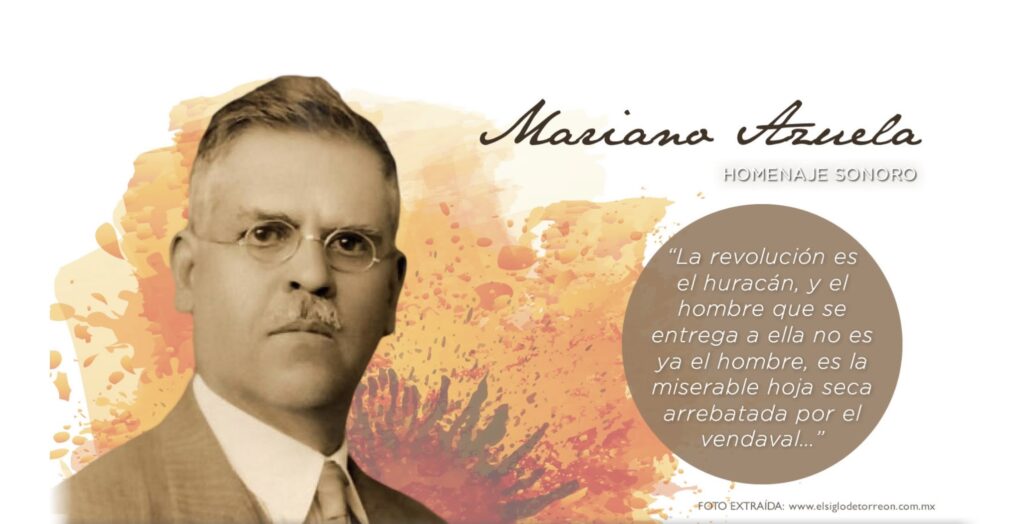
“The revolution is the hurricane and the man who is caught up in it is no longer a human, but a miserable dried leaf tossed about by the gale.” My translation.
Azuela does not moralize or editorialize; he simply shows. The prose renders atrocity with the same flat, clinical precision a doctor might use to describe a wound, and that detachment makes it more harrowing than outrage ever could.
The novel’s final pages are among the most devastating in Mexican literature. Demetrio returns to the same mountain pass where his rebellion began. His wife asks him why he still fights. He picks up a stone and tosses it into the canyon, watching it fall. “Look at that stone,” he says. “How it keeps on going.”
The revolution continues not because it has a destination but because it has momentum — because human beings, once set in motion by violence and injustice, do not easily stop. Demetrio dies in almost the same spot where he first fought, the novel ending in a circularity that is not triumph or tragedy but something more unsettling: futility.
Legacy: The Doctor’s Diagnosis
Azuela returned to Mexico City after the revolution’s dust settled and resumed medical practice, continuing to write for the rest of his life. He published some twenty novels in total, but none approached the cultural weight of The Underdogs.
He received the National Prize for Arts and Sciences in 1949, three years before his death in 1952 — institutional recognition that came late, as it so often does for writers who tell uncomfortable truths.
What distinguishes The Underdogs within the vast literature of revolution is precisely the quality that makes it difficult: Azuela refused to romanticize the cause he had personally served. Where lesser writers would have produced propaganda or elegy, he produced diagnosis.
The revolutionary soldier is not a hero in this novel; he is a human being seized by historical forces he cannot control or comprehend. The revolution does not liberate Mexico in these pages — it passes through Mexico like a fever, burning hot and leaving the body changed but not cured.
That medical metaphor is not accidental. Azuela the doctor understood that naming a disease is not the same as endorsing it, and that the most honest thing a witness can do is describe exactly what he saw — the courage and the cruelty, the hope and the rot — without flinching and without flattering anyone, including himself.
The Underdogs remains, more than a century after its composition, the essential novel of the Mexican Revolution. Not because it celebrates that revolution, but because it tells the truth about it.
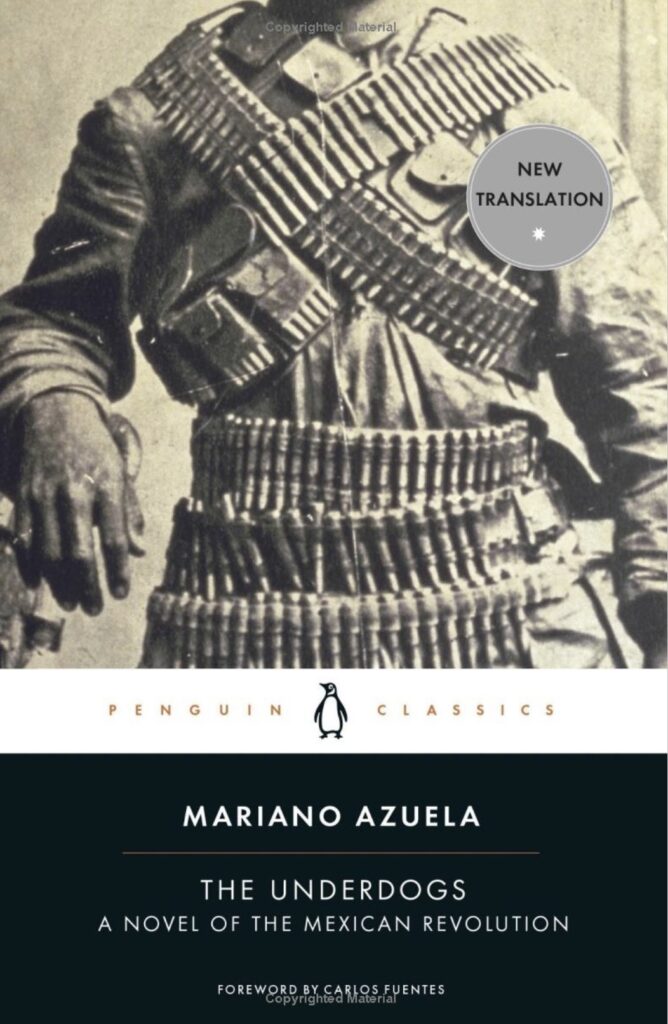
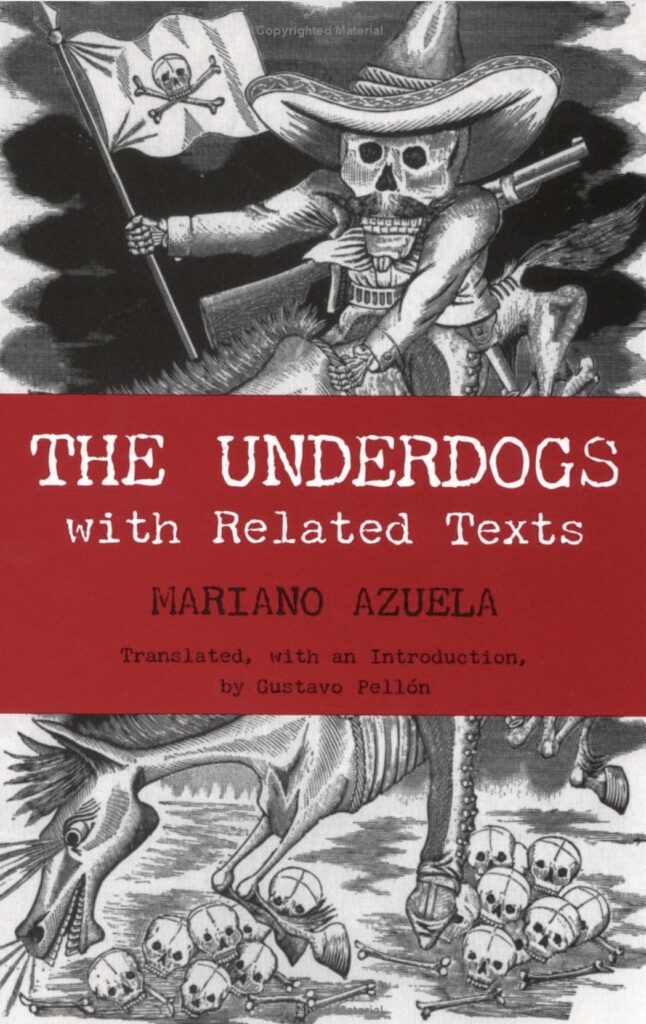
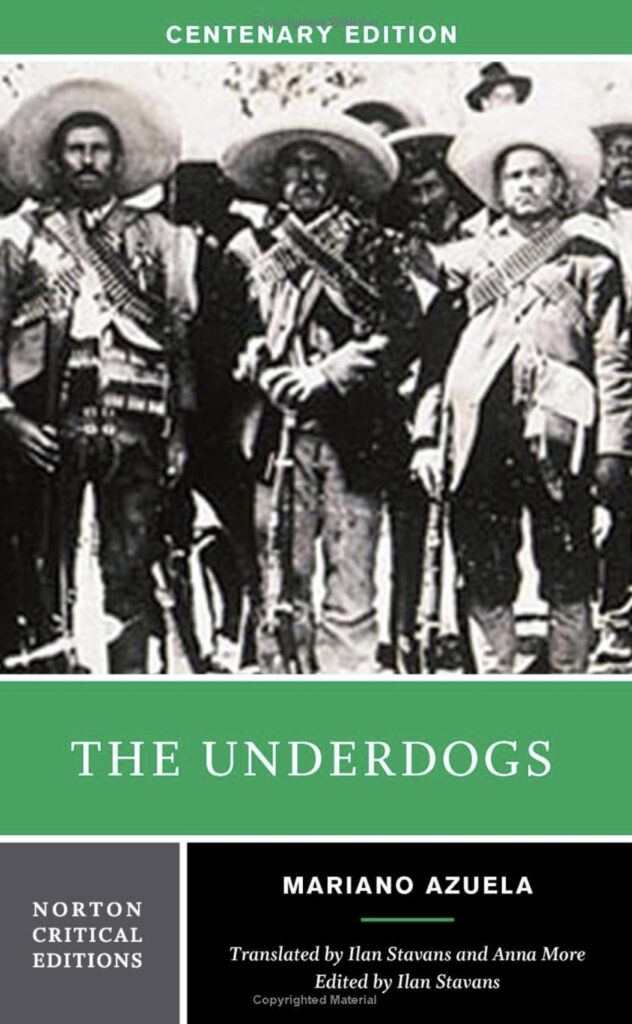
The Underdogs is sufficiently significant today to merit a host of editions, many of which contain collateral material, explanations, and literary criticism. Pick the one that best serves your purpose.
The Mariano Azuela stamp is from La Filatelia Mexicana.