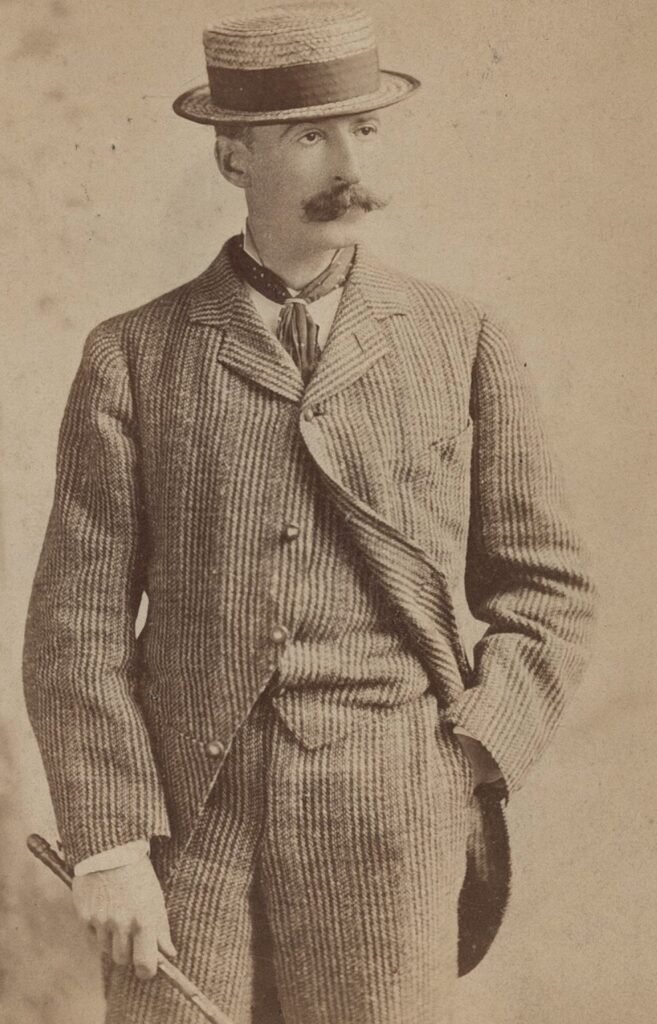
Winslow Homer (1836–1910) is regarded as one of America’s greatest painters, and his career traces a path from commercial illustration to fine art mastery. Born in Boston, Homer began as a magazine illustrator, working for Harper’s Weekly and developing a direct, observational style with minimal formal training.
His big break came during the Civil War, when Harper’s Weekly sent him to sketch Union troops. These illustrations became the basis for early paintings like “Prisoners from the Front” (1866), launching his fine art career.
In the 1880s, a transformative stay in Cullercoats, England, shifted Homer’s focus to nature’s power over human life. After returning home, he settled in Prout’s Neck, Maine, where the rugged Atlantic coastline became his lifelong subject. There he painted his most famous works — dramatic ocean scenes like “The Fog Warning” and “Eight Bells” — capturing humanity’s small but determined struggle against nature’s vastness.
Homer was also a groundbreaking watercolorist, producing loose, light-filled works during travels to Florida, the Caribbean, and the Adirondacks.
Unlike many peers trained in European academies, Homer’s unsentimental, distinctly American style helped define the young nation’s artistic identity — one rooted in resilience, realism, and respect for nature’s raw power.