If you’ve spent any time poking through European stamp albums, you’ve almost certainly run into the letters CEPT somewhere in a caption — often without much explanation of what they mean or why they’re there.
The initials stand for the European Conference of Postal and Telecommunications Administrations, and for decades they marked one of philately’s more quietly remarkable traditions: a single design or theme, issued simultaneously by dozens of independent postal authorities, year after year, since 1956.
Today these are usually called Europa stamps, and the annual issue has grown from a six-nation experiment into a program that draws participation from roughly 40 postal administrations across the continent — a run of nearly 70 consecutive years that makes it arguably the longest-lived joint philatelic program ever.
Six Countries and a Tower
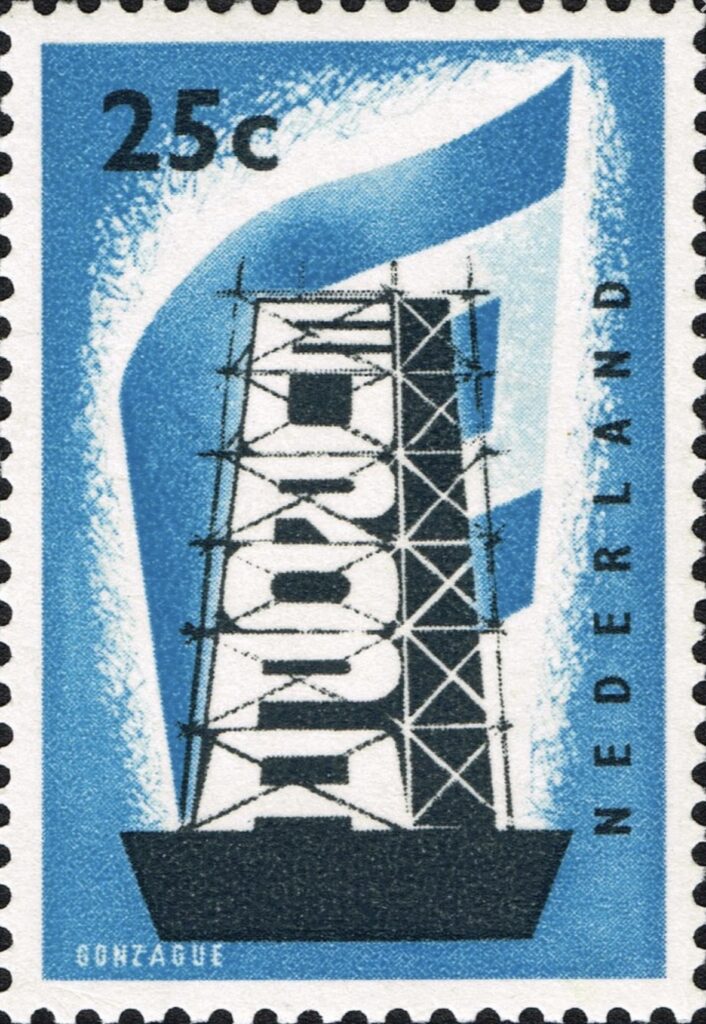
The idea took shape in the early 1950s, not long after the Treaty of Paris established the European Coal and Steel Community. The six founding members of that community — Belgium, France, West Germany, Italy, Luxembourg, and the Netherlands — decided a shared stamp issue might be a fitting, low-key way to express the sense of common purpose behind the new European project.
On September 15, 1956, they released the first joint issue: 13 stamps across the six countries, all sharing a single design by the French artist Daniel Gonzague, showing a tower built from the letters of the word EUROPA, wrapped in construction scaffolding. It’s hard to imagine a more literal metaphor for “building Europe” than that.
For the next few years the group kept experimenting. In 1957, they broke from a single unified design in favor of a shared theme (peace and welfare) executed differently by each country. In 1958, there was a dove flying over the letter E.
Then, in the summer of 1959, 23 European postal administrations met in Montreux, Switzerland, and formally established the CEPT. From that point on, the joint stamps carried the CEPT initials, and the club began to expand well beyond the original six.
The CEPT Years: One Design for Everyone
That system had real charm — a stamp album page from, say, 1969 shows the same temple motif rendered by artists in Austria, Denmark, Ireland, Switzerland, and a dozen other countries, each just swapping in local currency and lettering. But it also had a built-in limitation: a single piece of art, repeated with only minor variation, gets stylistically stale fast, and it left little room for individual postal administrations to bring their own visual identity to the table.
The first official Europa-CEPT issue, in 1960, saw 20 countries take part — more than triple the original number — sharing a design of a Roman mail-coach wheel with 19 spokes. For 11 of those countries, including Ireland, it was their first appearance in the series. (The number 19 refers to the original signatories, but another joined later, so 20 nations issued stamps.)
From 1960 through 1973, the program stuck to a genuinely unified approach: every participating country issued a stamp using the exact same artwork, just re-engraved with its own currency and country name. Year by year the motifs shifted — a stylized dove made of 19 smaller doves, a tree with 19 leaves, a cross, a flower marking the CEPT’s fifth anniversary, a temple built from the words “Europa” and “CEPT” for the 10th.
By 1973 the design was a stylized post horn with three arrows, said to represent the CEPT’s founding remit of posts, telegraphs, and telephones.
The Shift to Shared Themes, 1974 Onward
In 1974, the CEPT nations made the change that really shaped the program as collectors know it today. Instead of a common design, they agreed on a common theme, leaving each country’s post office free to commission its own artist and its own interpretation. The result was an explosion of variety. A single year’s theme might yield dozens of wildly different stamps, all connected only by subject matter.
The themes chosen over the following years read almost like a syllabus in European cultural self-portraiture: sculpture (1974), painting (1975), handicrafts (1976), landscapes (1977), monuments (1978), postal history (1979).
In 1980 the theme was famous people — which is where a lot of collectors first encounter some genuinely striking national issues, since each country got to choose which of its own notable figures to honor. Ireland’s contribution that year paired George Bernard Shaw and Oscar Wilde, two Dublin-born writers who reshaped English-language literature and theater from London, on stamps that stand comfortably among the more handsome entries in the whole Europa catalogue.
The parade of themes continued through the 1980s and 1990s: historic events, inventions, bridges, European Music Year, nature conservation, modern architecture, transportation, children’s games, and — fittingly, for 1992 — five hundred years since the voyages of Columbus.
As the Iron Curtain fell, the roster of participating countries swelled dramatically; nations from Ukraine to Armenia to Azerbaijan began issuing their own Europa stamps through the 1990s, and by 1999 the program had grown to 56 participating postal administrations issuing around a hundred stamps a year.
PostEurop Takes the Reins
In 1993, responsibility for organizing the Europa program passed from the CEPT itself to PostEurop, an association of European public postal operators, though the CEPT initials lingered on stamps for a few more years and the “Europa” branding — with its now-familiar logo — has carried the tradition forward ever since. A jury and, for a stretch starting in 2007, public voting have chosen a favorite design each year, adding a small competitive element collectors enjoy tracking.
The themes since 2000 have kept the same restless variety: water, circuses, poster art, gastronomy, scouting, astronomy, forests, castles, national birds, endangered wildlife, and — for the 2023 issue — simply “Peace,” a theme with obvious resonance given events on the continent. Now 2026 marks the program’s 70th anniversary, an extraordinary run for what began as a six-country gesture of postwar goodwill.
Why Collectors Keep Coming Back
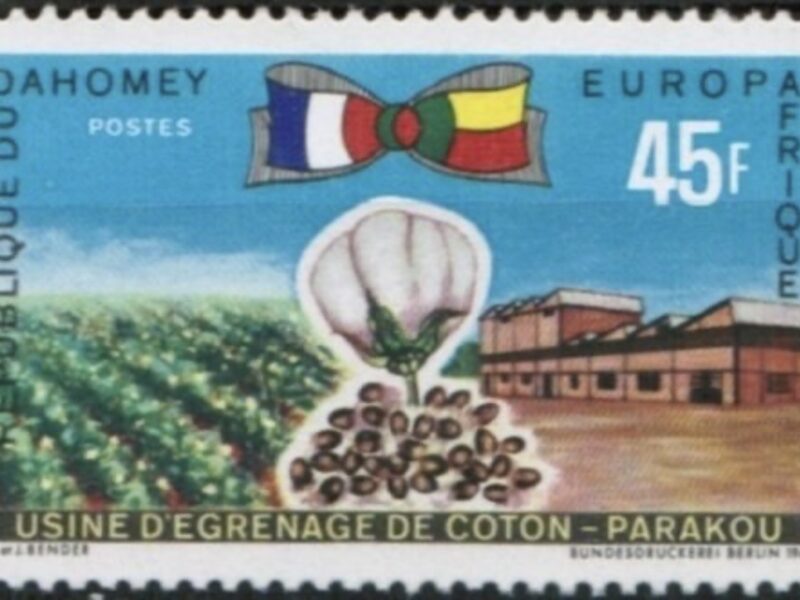
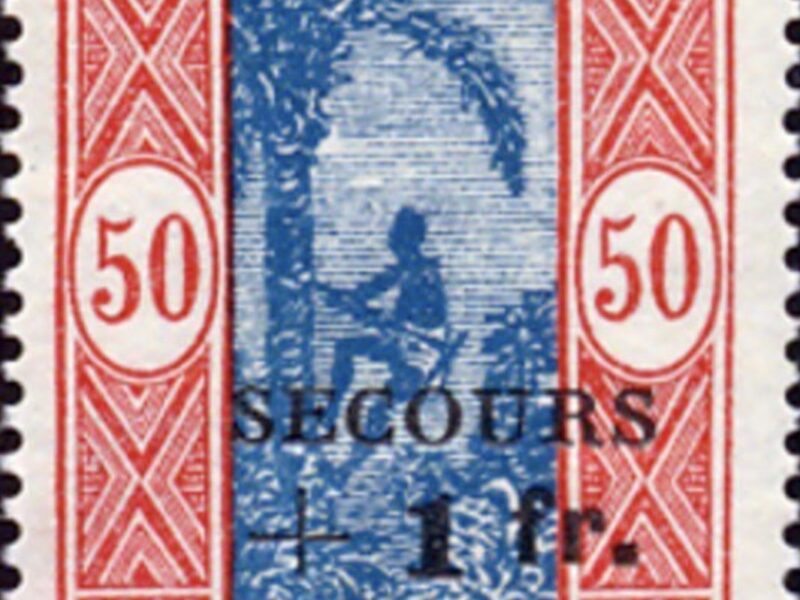
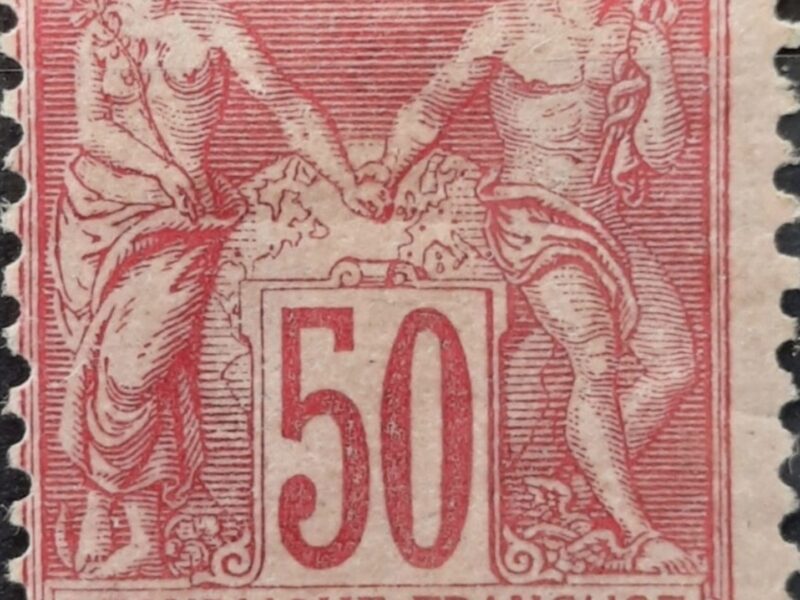
Part of the appeal of Europa/CEPT collecting is exactly this tension between unity and variety: a single theme, refracted through dozens of national printing houses, artistic traditions, and engraving styles.
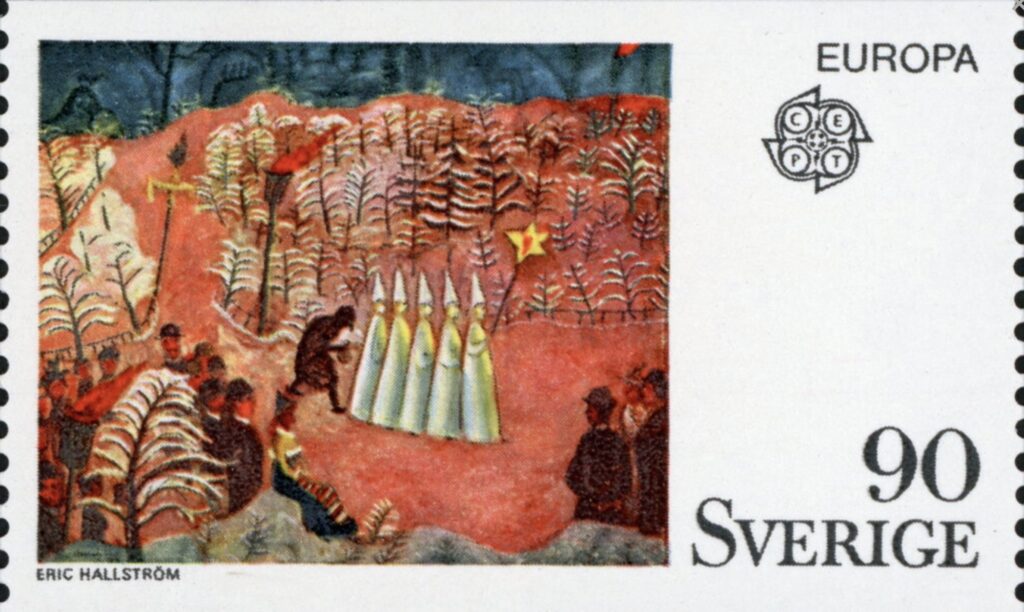
A “castles” year or a “national birds” year becomes a miniature comparative art exhibition, where you can watch the same brief work its way through completely different visual languages from Iceland to Cyprus.
It’s also a program with real historical texture built in — you can watch European integration, the end of the Cold War, and the expansion of the postal club play out in real time across the stamp albums, one small rectangle of paper at a time.
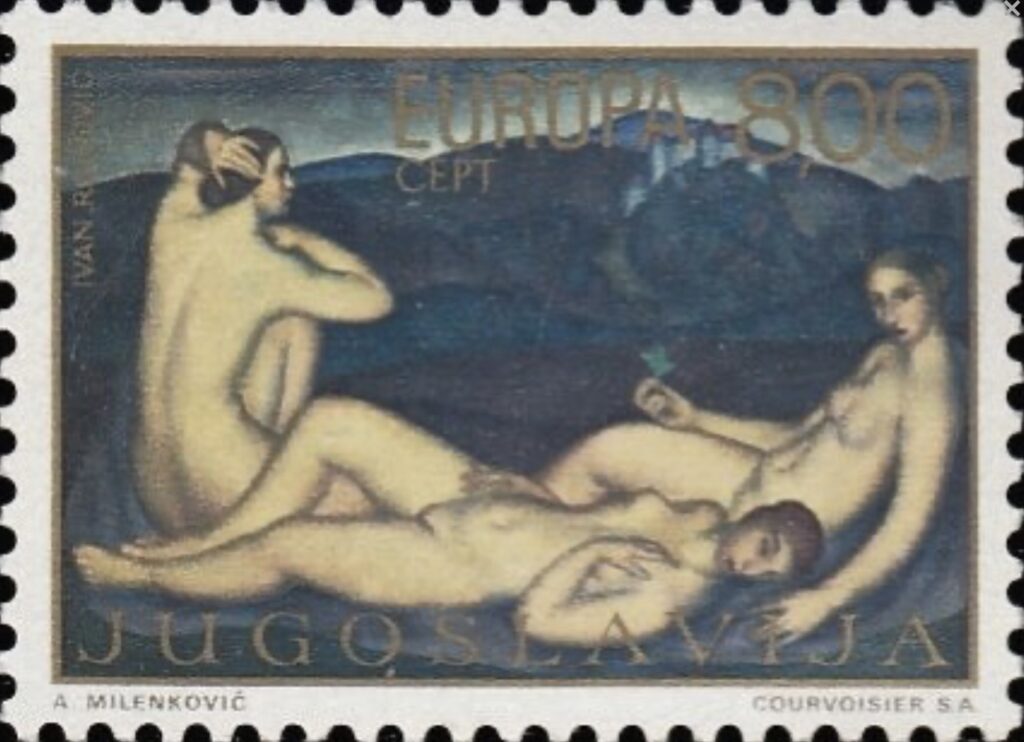
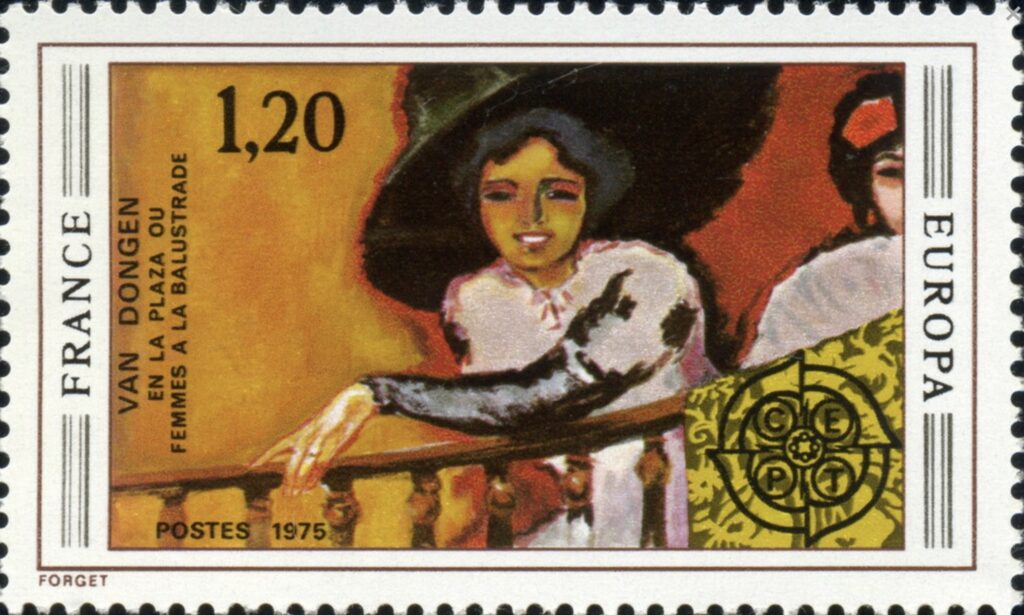
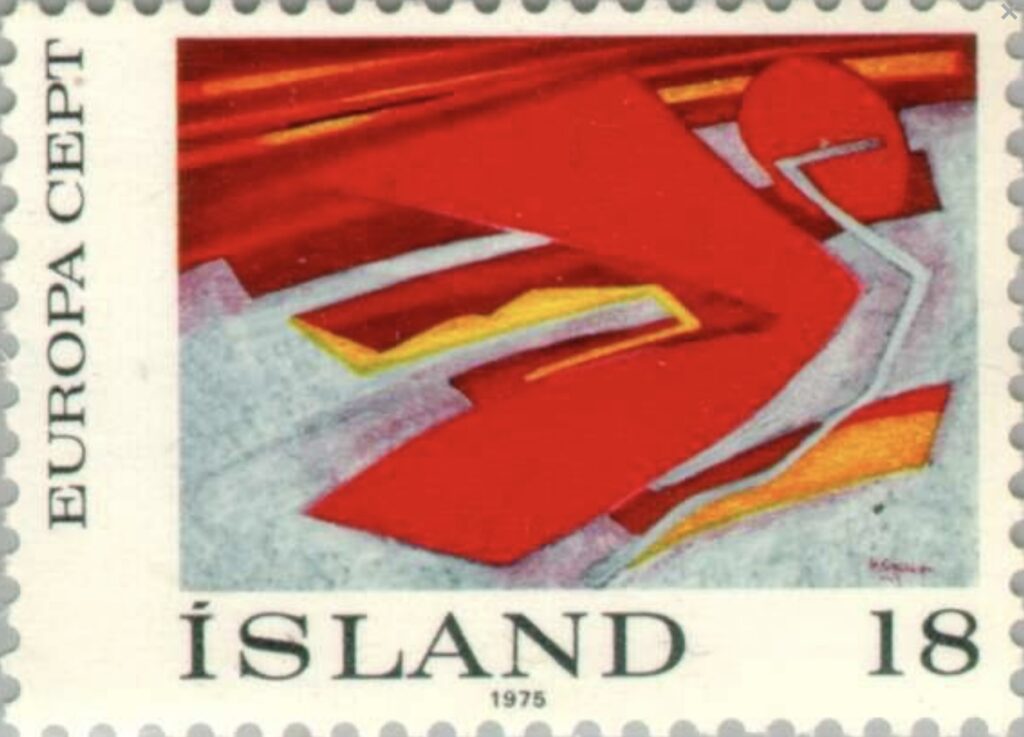
The four fine art stamps illustrated here, drawn from a single year’s issue (1975, when the theme was fine art), are a small example of that pattern in miniature: a shared theme, a distinctly national choice of subject, and a design that stands entirely on its own even while belonging to something much larger.
The art stamps, from top down, are “The Three Graces,” by Ivan Radović, for Yugoslavia; “Woman on the Balcony,” by Kees van Dongen, for France; “Autumn Bird,” by Þorvaldur Skúlason, for Iceland; and “New Year at Skansen,” by Eric Hallström, for Sweden.
1 thought on “CEPT: A Tower, a Dove, and 70 Years of Europe on a Stamp”