There is an old photograph of David Alfaro Siqueiros that captures the man perfectly: jaw set, eyes blazing, a paintbrush in one hand and a political pamphlet within arm’s reach.
He was never just a painter. He was a soldier, an agitator, a Communist organizer, and occasionally a fugitive. That he managed to cover the walls of Mexico with some of the most ferocious murals in the history of art is either a miracle of discipline or proof that fury, properly channeled, never runs dry.
The Making of a Revolutionary Artist
Siqueiros was born José de Jesús Alfaro Siqueiros on December 29, 1896, in Chihuahua, Mexico. He would eventually take the surname of his mother and the given name his wife bestowed on him — “David” — an allusion to Michelangelo’s famous sculpture, a name that suited a man who spent his life doing battle with giants.
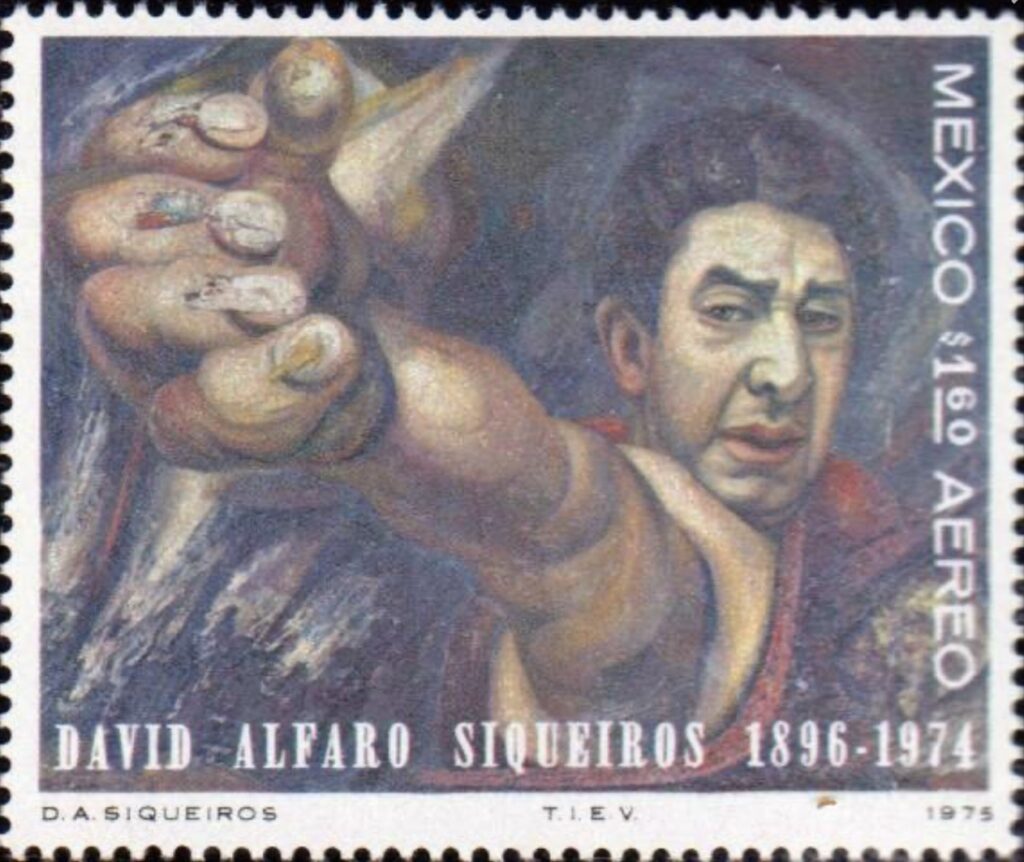
His mother died when he was four, and he was raised by his paternal grandparents. He arrived at the Academy of San Carlos in Mexico City at 15, already politically combustible. Almost immediately, he helped organize a student strike against the school’s antiquated teaching methods — his first arrest, though far from his last.
When the Mexican Revolution erupted in 1910, the young Siqueiros found his moment. He enlisted in the army of Venustiano Carranza, fighting to dismantle the military dictatorship of Victoriano Huerta. By the time the shooting paused, he had risen to the rank of captain.
He then traveled to Europe, where he encountered Picasso’s Cubism and Cézanne’s structural rigor — and where he met a fellow Mexican exile named Diego Rivera. Together, they would help remake the visual culture of their country.
Back in Mexico in the early 1920s, under the enlightened patronage of Education Minister José Vasconcelos, a generation of artists was handed the walls of public buildings and told to paint the story of Mexico for a people still largely illiterate.
Siqueiros, Rivera, and José Clemente Orozco became Los Tres Grandes — the Big Three — of the Mexican Muralist Movement. Of the three, Siqueiros was the most technically experimental and perhaps the most politically uncompromising.
An Artist Who Liked to Improvise — With Paint and Otherwise
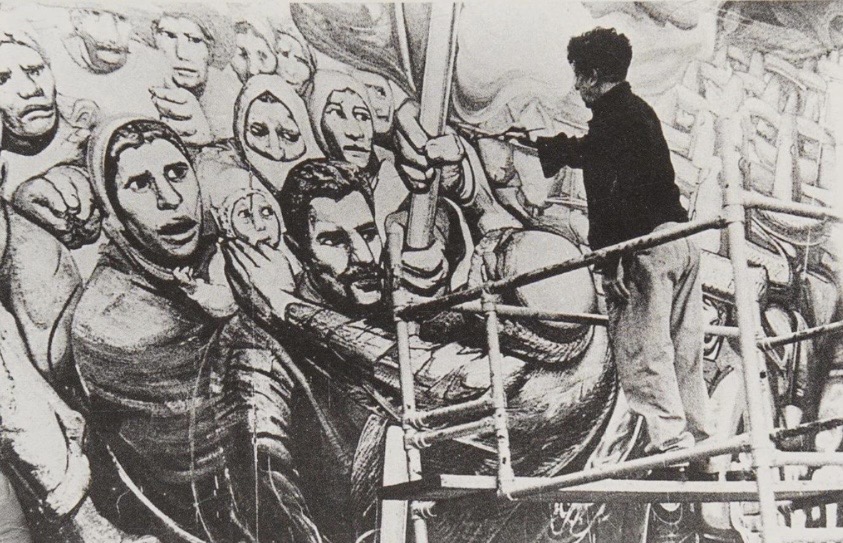
Siqueiros was a restless innovator. He rejected the traditional fresco technique in favor of modern industrial materials — pyroxylin (a synthetic lacquer used in automobile paint), spray guns, and airbrushes. He used projectors to scale images onto curved surfaces.
He thought in three dimensions when everyone else thought in two, designing rooms rather than walls, so that the painted scene surrounded and enveloped the viewer. His figures lean forward, foreshortened, as if reaching out of the picture plane to seize the onlooker by the collar.
His personal life matched his art in turbulence. He fought in the Spanish Civil War as a Lieutenant Colonel for the Republic. In 1940, he led a machine-gun raid on the home of Leon Trotsky in Mexico City — an assassination attempt that failed, leaving Trotsky alive but Siqueiros on the run, disguised as a peasant, before being captured in Jalisco. He was imprisoned in 1959 for supporting a railroad workers’ strike. The Mexican government jailed him; it also commissioned his greatest work.
Del Porfirismo a la Revolución: A Mural You Have to Walk Through
High on the hill of Chapultepec — a forest park at the heart of Mexico City where Aztec emperors once retreated and where French-imposed Emperor Maximilian later made his home — stands the Castillo de Chapultepec. Today it houses the National Museum of History. And inside that museum, in a gallery that bends and curves in ways no ordinary gallery should, lives the most kinetic mural David Alfaro Siqueiros ever painted.
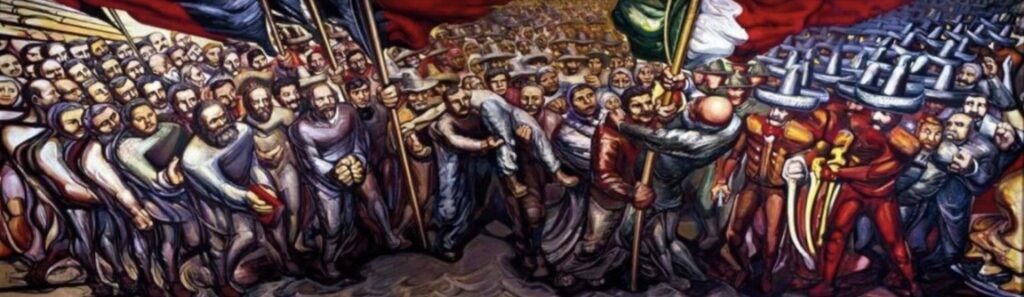
Titled Del Porfirismo a la Revolución — From the Dictatorship of Porfirio Díaz to the Revolution — the work was painted between 1957 and 1966, interrupted by Siqueiros’s four-year imprisonment. When the gallery proved too small for his ambitions, Siqueiros did what any reasonable muralist would do: he built more walls. He designed a curving internal structure so that the painted surface snakes and twists through the space, dragging the viewer along with it. It covers roughly 4,500 square feet of wall, spread across nine sections in two adjoining rooms. There are, famously, no straight lines. Everything is on an angle. The mural does not hang still — it moves.
The subject is the five years of agony and uprising that preceded the fall of Porfirio Díaz in 1911: one of the most consequential moments in Mexican history, and one of the most personal to Siqueiros, who had fought in the revolution it unleashed.
Porfirio Díaz: The Man on the Wall
To understand the mural, you must understand its villain — and Siqueiros understood him better than most.
Porfirio Díaz ruled Mexico for nearly thirty-five years, a period known as the Porfiriato. He brought railroads and foreign investment and a veneer of modern progress. He also brought crushing inequality, the brutal suppression of indigenous communities and labor organizers, and a coterie of technocratic advisors his critics called los científicos — the scientists — men who believed the country’s poor were simply biological material to be managed.
In the mural’s key scene, Siqueiros renders Díaz enthroned in comfort, encircled by his científicos and by women dancing in his honor — a tableau of decadence while the country bleeds.
Díaz’s boot rests squarely on the Mexican Constitution of 1857. In the upper right corner, in a moment of pointed revelation, Siqueiros shows Díaz brandishing a dagger, dropping the mask of the civilized statesman to reveal the dictator beneath.
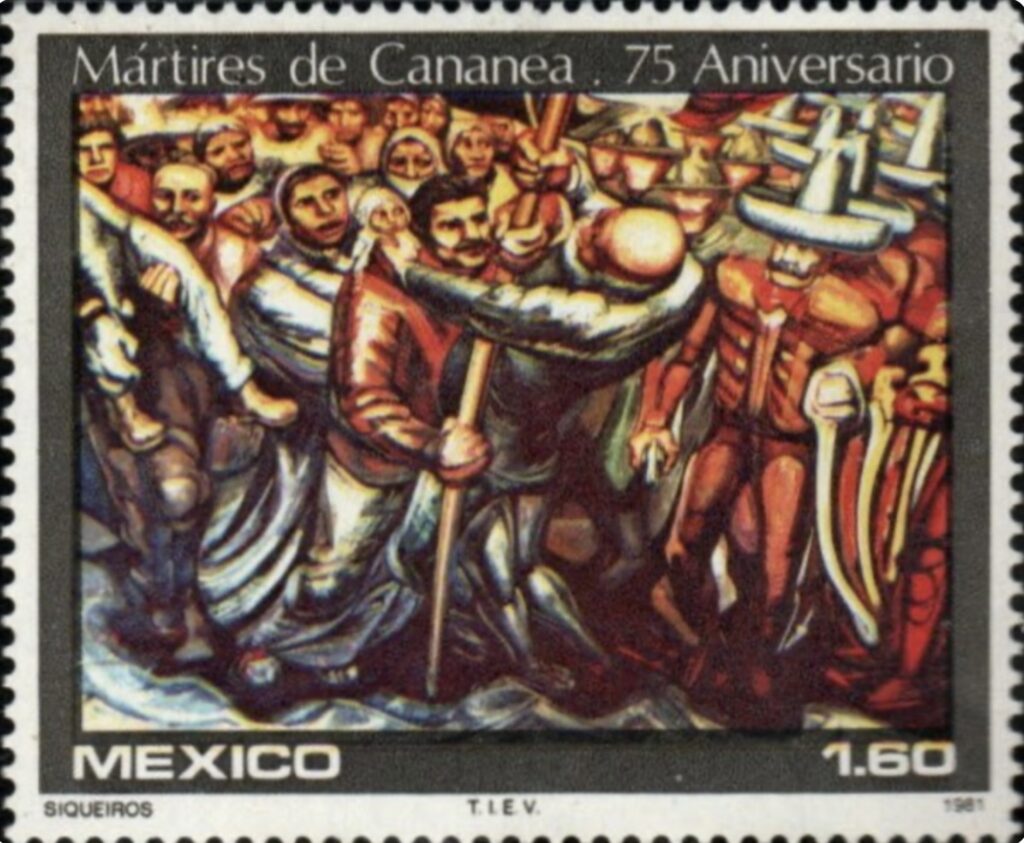
The Cananea Strike of 1906 occupies a central dramatic panel. That year, Mexican workers at an American-owned copper mine in Sonora rose up against discriminatory wages and dangerous conditions. The mine owner summoned Arizona Rangers and many other gringos from across the border to help suppress the strike, and Mexican government troops joined the crackdown.
Eleven Mexicans and two Americans died; many more fled. Siqueiros paints the confrontation in explosive color — the Mexican Rural Guard (Rurales) and the American Rangers on one side, anonymous and faceless (an artistic choice that strips them of heroism and accountability), while the workers on the other side are individuated, human, alive even in death.
Two men wrestle over a Mexican flag. A figure cradles a fallen comrade. Karl Marx, the philosophical godfather of the uprising in Siqueiros’s telling, stands among the workers holding his Capital.
On the facing wall, the revolutionary army marshals its forces around figures including Emiliano Zapata, Francisco Madero, Francisco Villa, and Venustiano Carranza — arrayed in opposition to the stern, immovable Díaz.
The mural is not a lecture. It is an experience. As visitors walk through the gallery, the images press in from every curved surface, the perspective constantly shifting. You are not watching the revolution; you are inside it.
The Time magazine critic who attended the ribbon-cutting in 1966 noted that hundreds of Mexicans — art students, aging veterans of the revolution itself — poured through Chapultepec’s corridors to see it. They came to meet their own history, rendered in fire and motion by a man who had lived part of it himself.
The Legacy of El Maestro
Siqueiros died on January 6, 1974, in Cuernavaca. He was seventy-seven and still working. His final and most sprawling project, The March of Humanity, covered 48,000 square feet at the Polyforum Cultural Siqueiros in Mexico City — at the time, the largest mural in the world.
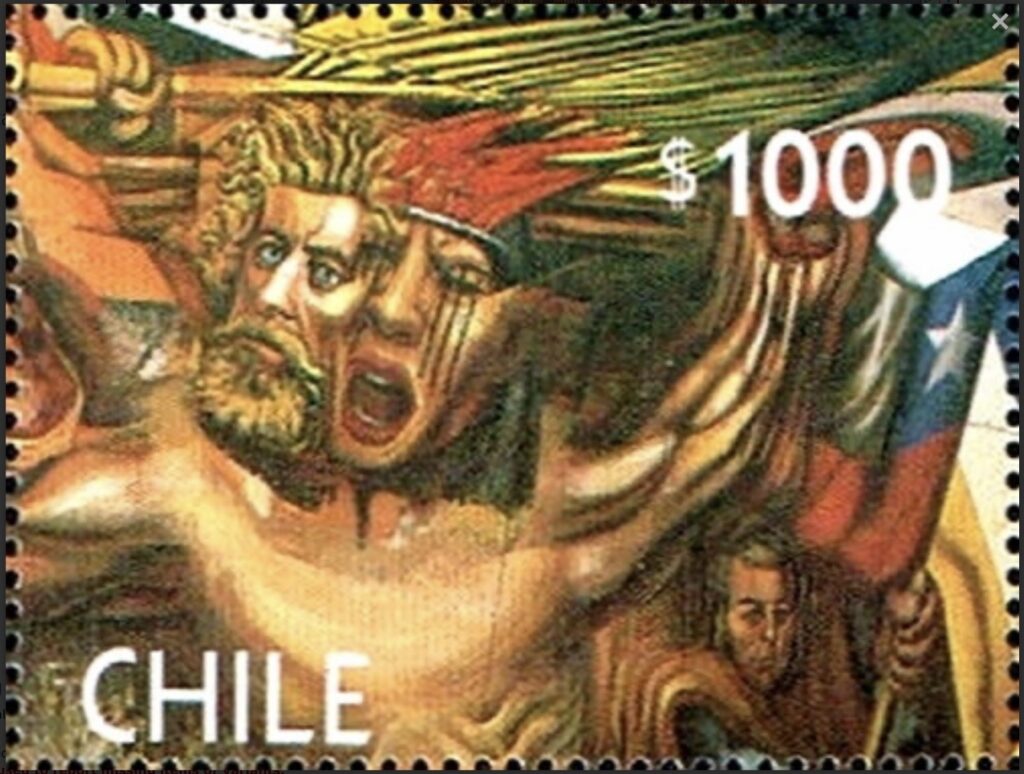
He left behind a body of work that spanned continents: Los Angeles, where his América Tropical was whitewashed as Communist propaganda and then painstakingly restored 80 years later; Buenos Aires; Spain; Mexico City. He influenced the Chicano mural movement that would flower in East Los Angeles and Chicago a generation after his death.
He remains, alongside Rivera and Orozco, one of the architects of a uniquely Mexican art form that turned public walls into instruments of history and conscience.
But it is the mural at Chapultepec that may be his finest hour — the work of a man in his 60s, interrupted by imprisonment, who returned to his brushes the moment the prison door opened and finished what he started. In the Hall of the Revolution at Chapultepec Castle, the walls still lean forward, the figures still reach, and Porfirio Díaz still puts his boot on the Constitution while the workers rise to take it back.