There is a particular kind of intimacy in handwriting. Every loop and slant carries something of the hand that made it — a pressure, a hesitation, a flourish.
For more than a thousand years, the instrument behind nearly every word written in the Western world was not a pen as we’d recognize one today, but a feather. Stripped, cut, and sharpened, the humble quill became the tool through which empires were governed, treaties were sealed, and revolutions were declared.
From Goose to Glory
The quill pen’s origins trace back to around the 6th or 7th century, when scribes in Europe began replacing the reed pens used in antiquity with feathers — typically from geese, though swan, turkey, and even crow feathers had their devotees depending on the fineness of line a writer wanted.
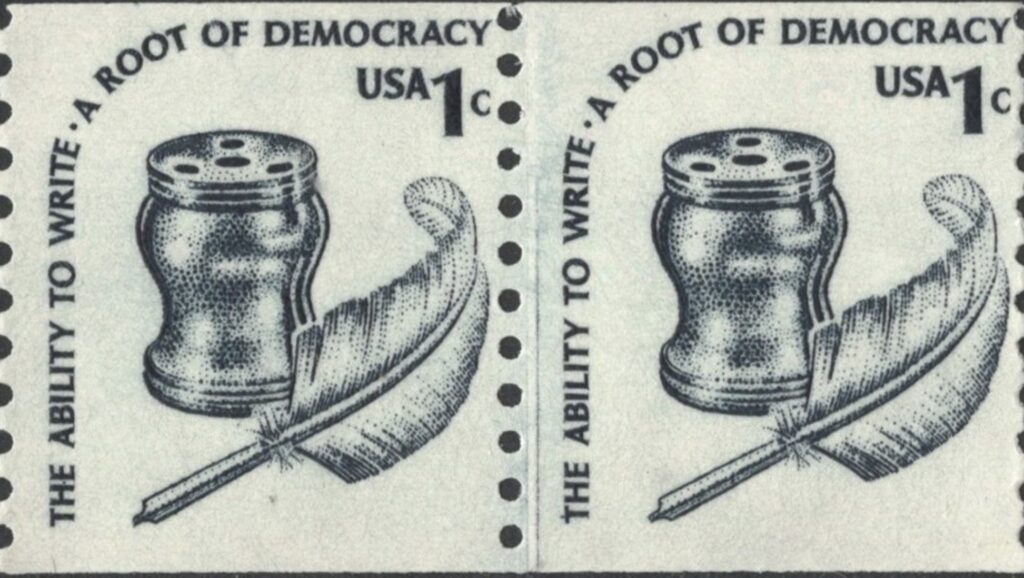
There were several stamps in the Americana issue of 1977, each highlighting a different freedom guaranteed by the Bill of Rights.
Goose feathers won out for practical reasons: They were abundant, durable, and flexible enough to hold their shape under the pressure of writing while still yielding a touch of give.
Making a quill usable wasn’t as simple as plucking a feather and dipping it in ink. The feather first had to be “cured” — dried out, sometimes by burying it in hot sand, to harden the keratin shaft and prevent it from going soft and splitting under use.
Then came the real craft: cutting the tip. A skilled scribe, or later, a professional pen-cutter, would slice the hollow shaft at an angle, carve a small slit up the center to let ink flow by capillary action, and shape the nib to the writer’s preferred width and style. This is where the word “pen” itself comes from — the Latin penna, meaning feather.
A quill didn’t last long. Constant dipping, scratching, and the natural wear of paper against the nib meant a working scribe might recut or replace a quill several times in a single day. Inkwells sat permanently at the elbow, not as decoration but as necessity — a writer’s productivity was measured as much in ink dipped as in words composed.
The Instrument of Statecraft
It’s hard to overstate how thoroughly the quill shaped the administrative and intellectual life of the early modern world. Every letter of Shakespeare’s plays, every clause of the Magna Carta, every page of the King James Bible was formed feather-first.
Monasteries kept rooms — scriptoria — dedicated entirely to the production of manuscripts, where rows of monks bent over desks, quills scratching in near silence, copying texts that might otherwise have vanished from history entirely.
By the 18th century, the quill had become inseparable from the rituals of governance. Treaties were signed with quills selected for their ceremonial weight as much as their function; The pen used to finalize a document was sometimes preserved afterward as a relic of the moment itself.
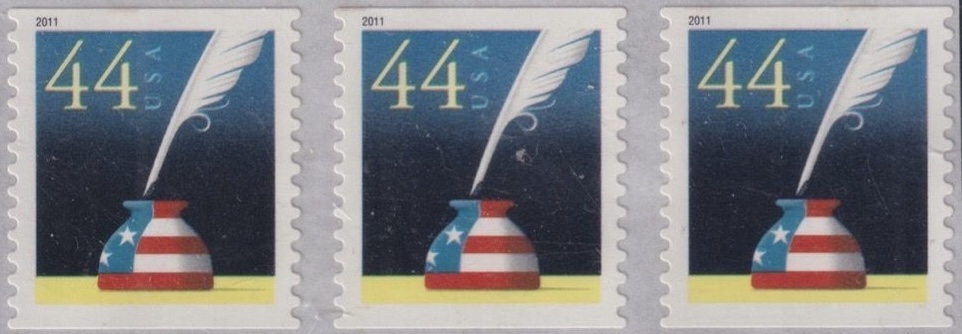
The quill pen with the patriotic inkwell was issued February 14, 2011, for first-class mail, at Kansas City, Missouri.
In the American colonies, quills were the tool of correspondence, law, and increasingly, dissent. Letters between patriots, drafts of pamphlets, petitions to the Crown — all of it moved through history one feathered stroke at a time.
The most consequential of these strokes came in Philadelphia in the summer of 1776. When the Continental Congress approved the final text of the Declaration of Independence, the document was transcribed and signed using quill pens, the delegates dipping into inkwells — among them the ornate silver stand crafted by Philadelphia silversmith Philip Syng, which had already served the Congress and would later be present again at the signing of the Constitution.
There is something fitting about the fragility of the instrument matched against the permanence of what it produced: a feather, by nature ephemeral, used to write words intended to outlast nations.
Decline and Afterlife
The quill’s reign didn’t end quickly. Attempts to manufacture metal pens date back centuries, but it wasn’t until the early-to-mid 1800s, with improvements in steel manufacturing, that mass-produced steel-nib pens became cheap and reliable enough to displace the feather in everyday use.
By the time the fountain pen arrived later in the century, the quill had largely retreated from common use into the realm of the ceremonial and the artistic — calligraphers, illuminators, and traditionalists who valued its particular line over the convenience of steel.
And yet the quill never fully disappeared from cultural memory.
It survives as shorthand for an entire era of thought and authorship — the image conjured whenever someone speaks of “putting pen to paper” in matters of consequence.
Courtrooms, universities, and legislatures still hand out ceremonial quills at signings, not because anyone expects them to write smoothly, but because the gesture borrows gravity from the past. To sign with a quill is to gesture, even symbolically, toward the founding documents, the literary manuscripts, and the centuries of correspondence that came before.
A Symbol That Keeps Writing
What’s struck me most, working on projects connected to this history, is how durable the image of the quill has remained even as the object itself faded from daily use.
It shows up in logos, seals, and insignia precisely because it compresses so much meaning into a single silhouette: authorship, formality, history, the weight of the written word. A quill drawn in outline can suggest the Declaration of Independence, a university’s founding charter, or simply the idea of a story being told — all without a single word of explanation.
That’s a remarkable inheritance for a tool that was, at its core, just a sharpened feather and a steady hand.
The quill didn’t survive because it was efficient — steel and ink cartridges saw to its retirement long ago. It survived because of what it was present for: the documents, the decisions, the declarations that needed something more than convenience behind them.
Centuries later, the silhouette of a feather dipped in ink still carries that same suggestion — that what follows matters enough to be written down carefully, and remembered.
All of this is why the logo of this website portrays a quill pen on a mockup of a postage stamp. It portrays and right and a privilege and knowing more about our world can continue to change lives.
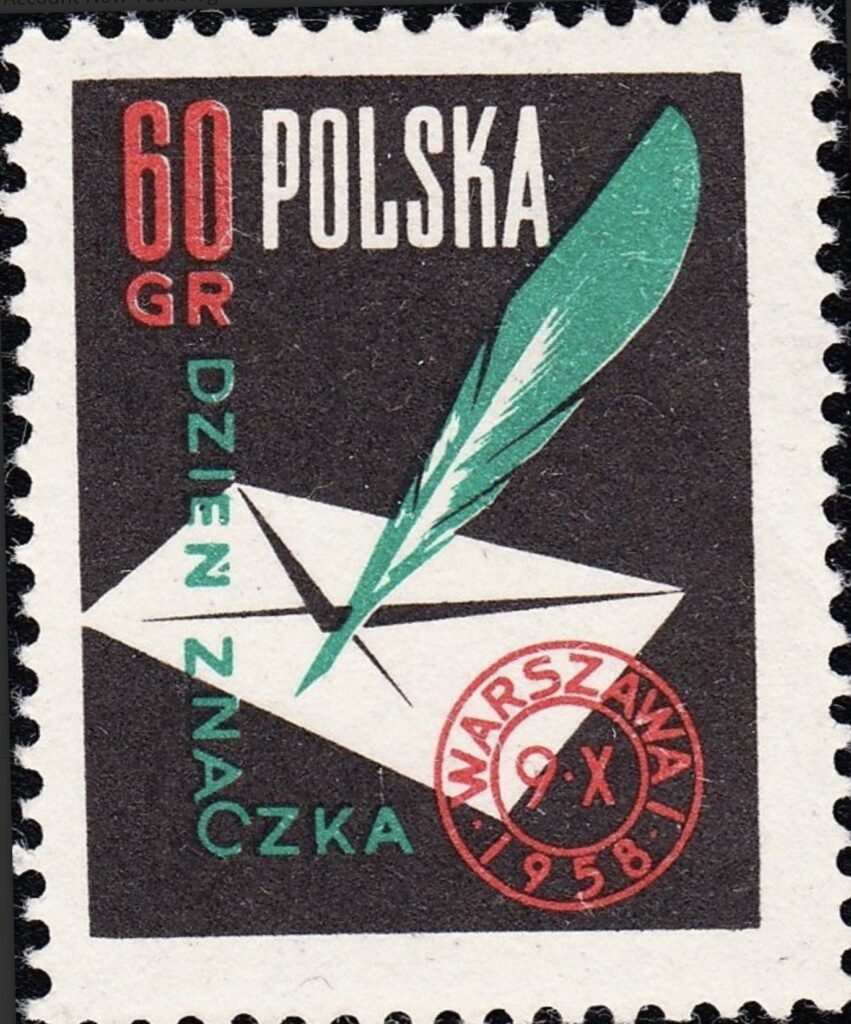
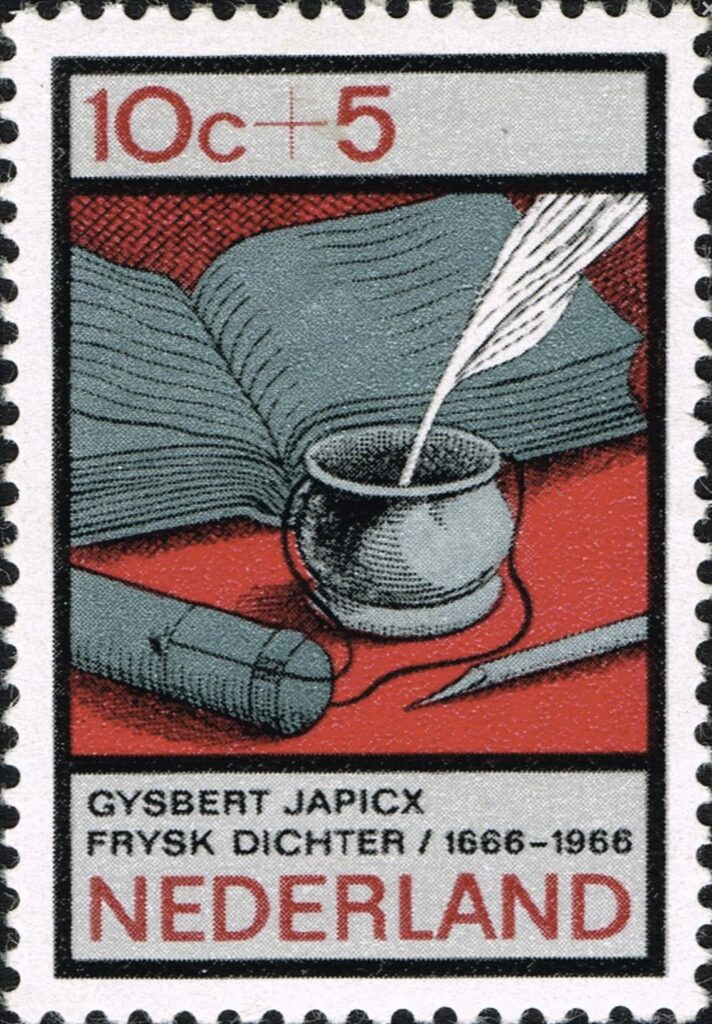
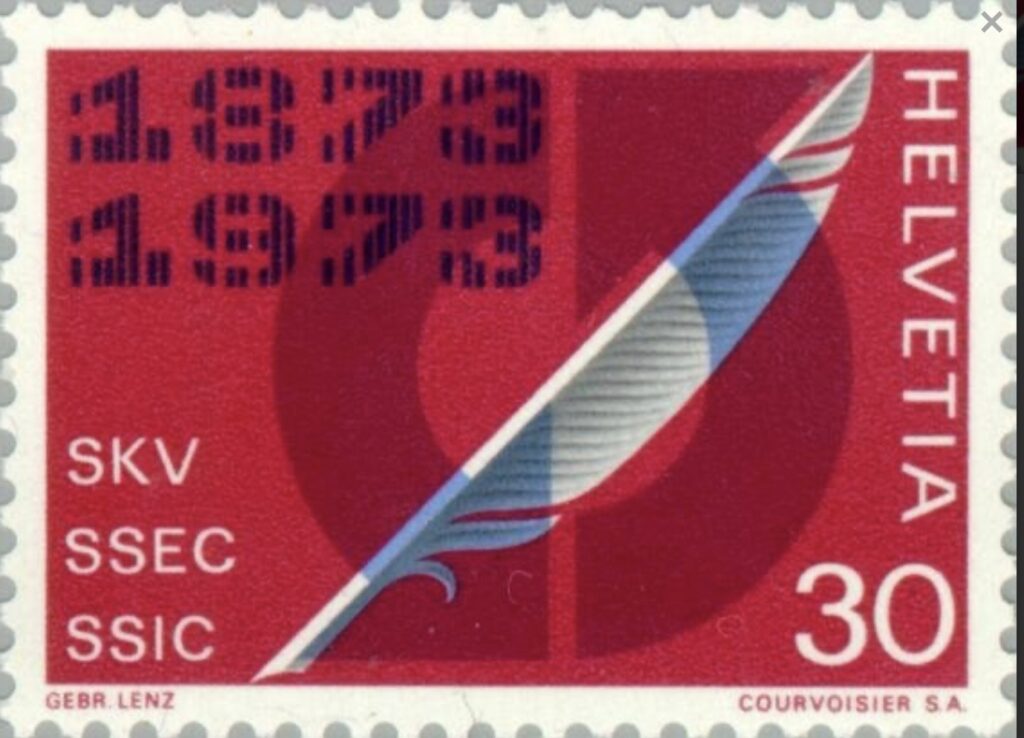
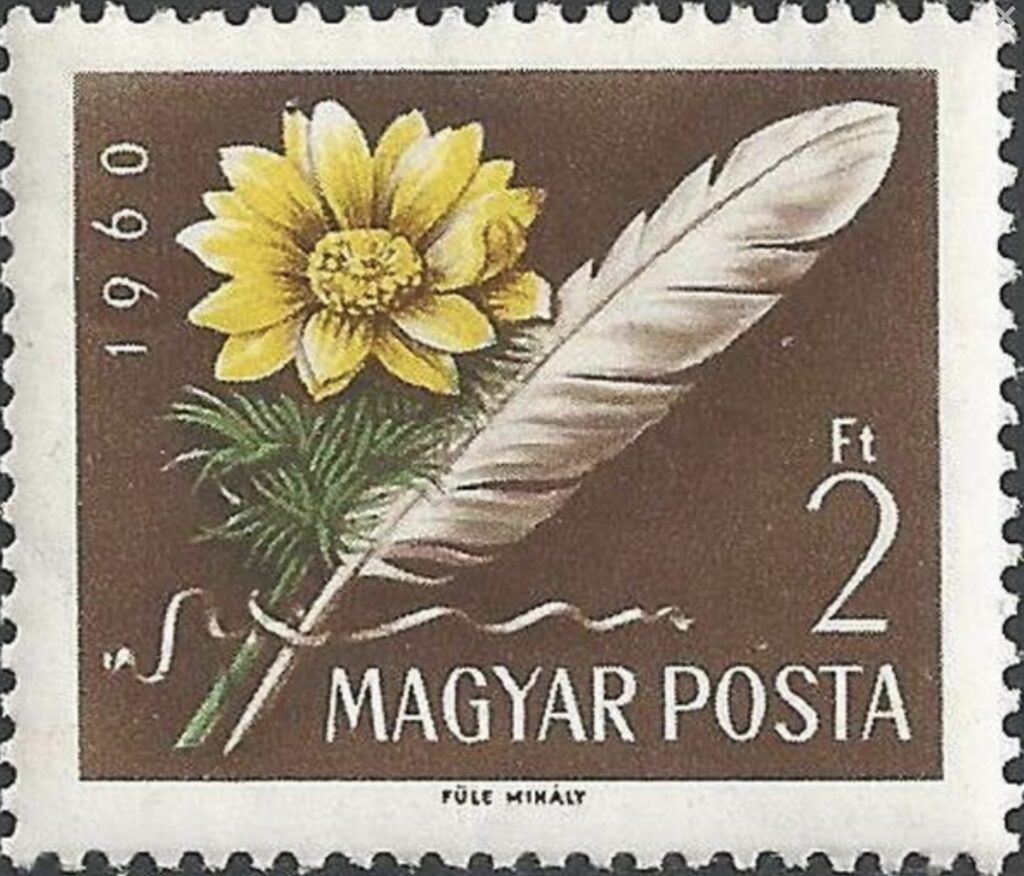
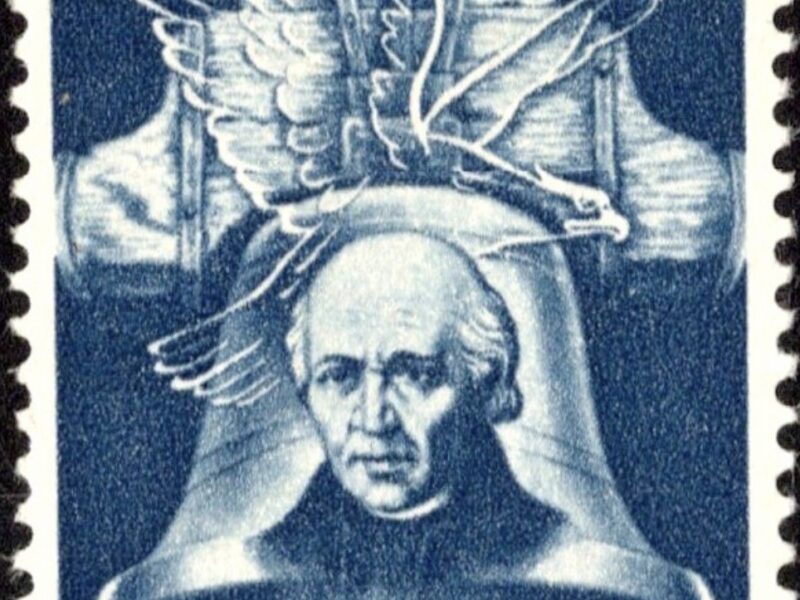
Many nations have issued stamps picturing the quill pen, and for much the same reason. The stamp from Poland, above left, is from 1958 and features letter writing. The issue from the Netherlands, at right, celebrates the Frisian poet Gysbert Japicx. The 1973 Swiss stamp, below left, commemorates a century of the Swiss Society of. Commerce. And the Hungarian stamp was simply issued in honor of Stamp Day.