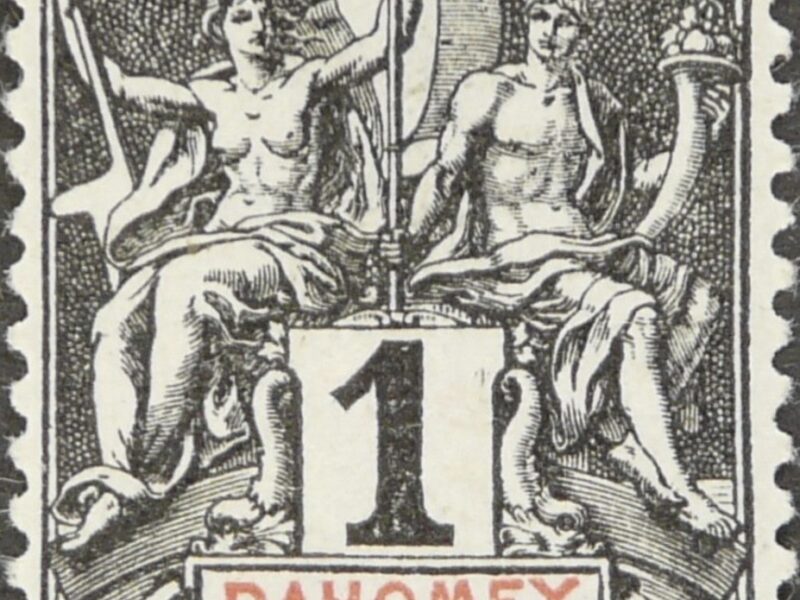
Say the word “voodoo” to most Americans and a familiar picture appears: a pin-stuck doll, a zombie shuffling out of a 1930s movie, a shop on Bourbon Street selling love potions to tourists. Almost none of that has much to do with the real thing.
Behind the Hollywood caricature lies one of the world’s oldest living religions, a faith that crossed the Atlantic in the holds of slave ships, took root in Haiti, Louisiana, Cuba and Brazil, and is still practiced openly today in the West African country where it began. Each January, in fact, hundreds of thousands of people gather on the coast of Benin to celebrate it.
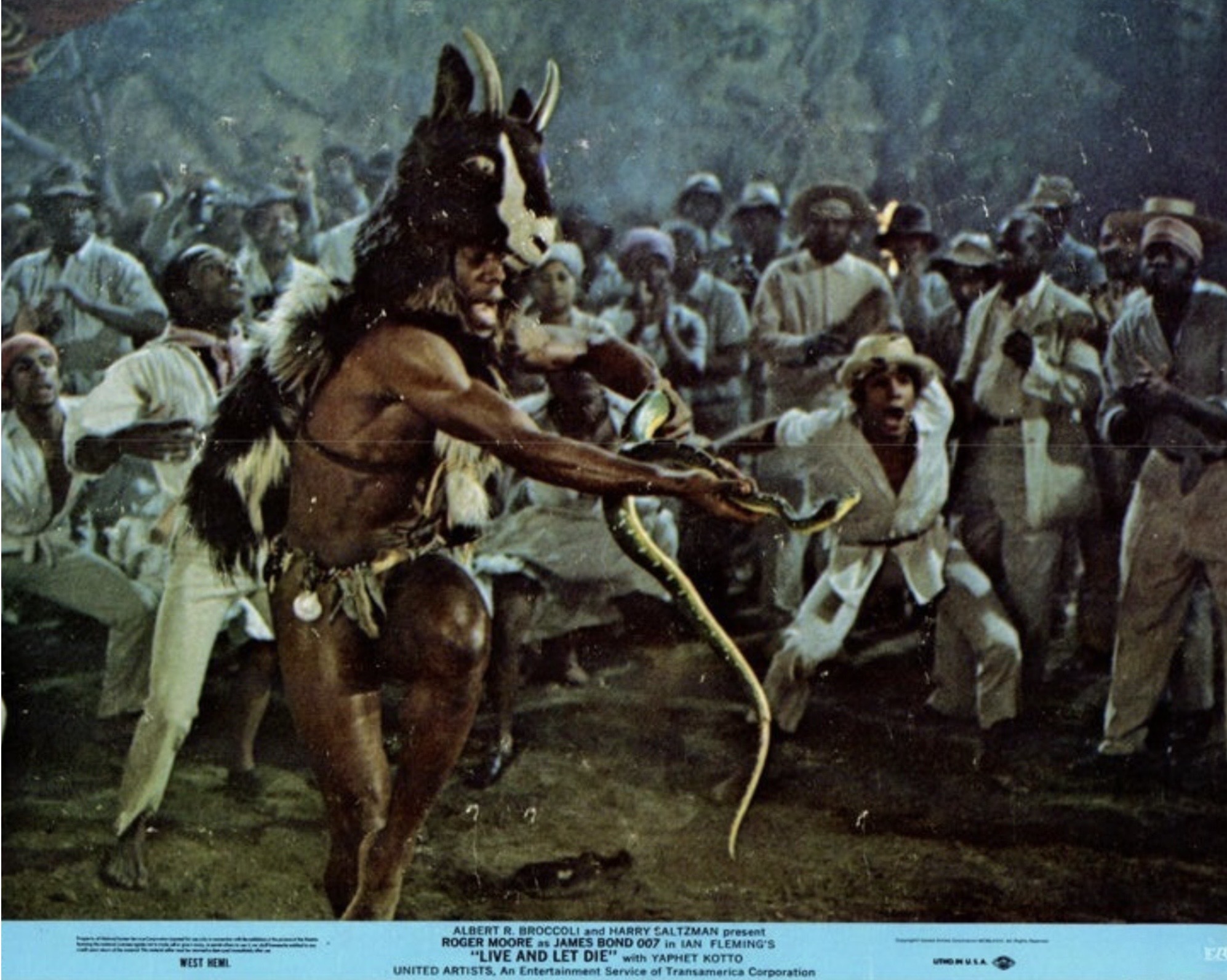
This lobby card from the 1973 James Bond movie “Live and Let Die” demonstrates what voodoo is not and shows how most people get their ideas about the subject. Here’s an extensive article about the myth shown in the movie.
Even the name has traveled. Scholars and practitioners generally use Vodun (or Vodoun) for the West African religion, Vodou for Haiti, and Voodoo for the New Orleans tradition. They are branches of the same tree, but each grew in its own soil.
Where It Began
Vodun comes from the Fon, Ewe, Gun and related peoples living along the Bight of Benin, the stretch of coast now divided among Benin, Togo and eastern Ghana. In the Fon language, vodun simply means “spirit” or “divine force.” At the top of the system stands a remote creator, often named as the paired deity Mawu-Lisa, who is too distant to be bothered with daily affairs.
The real business of religious life is conducted with the vodun themselves: Legba, the gatekeeper who must be honored first because he opens the way between worlds; Heviosso, the thunder; Sakpata, lord of the earth and of disease; Gu, the spirit of iron and war; Mami Wata, the spirit of the waters; and Dan, the serpent, whose most famous earthly home is a temple full of live pythons in the town of Ouidah.
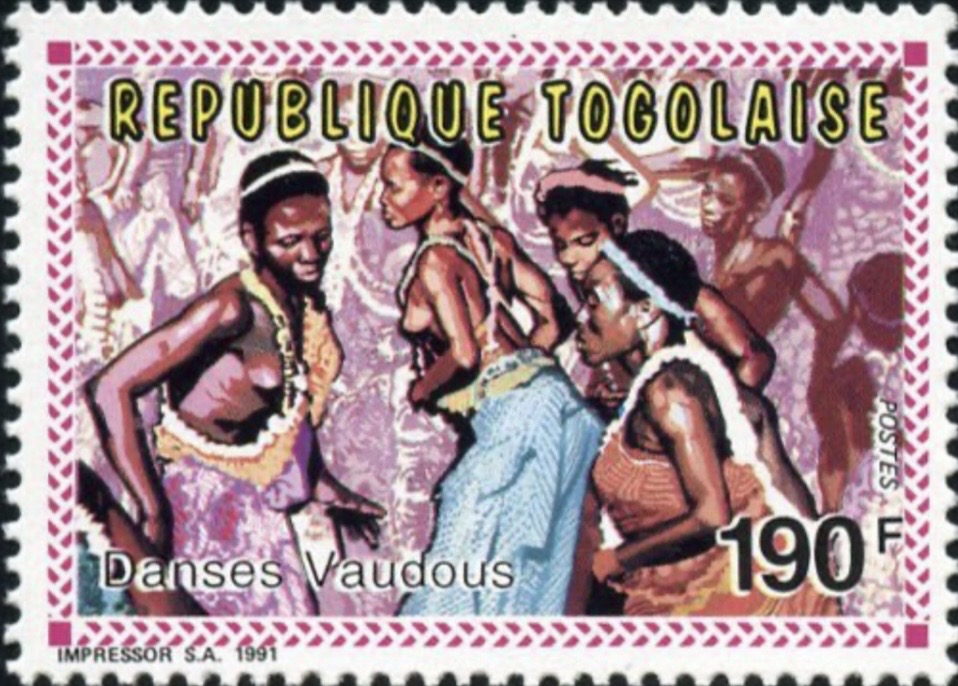
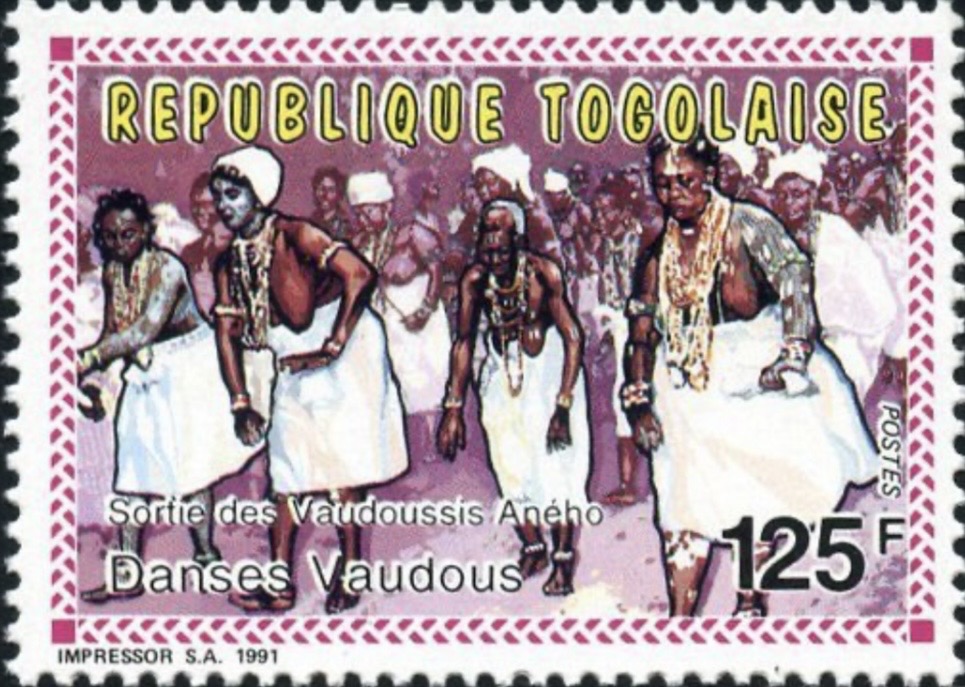
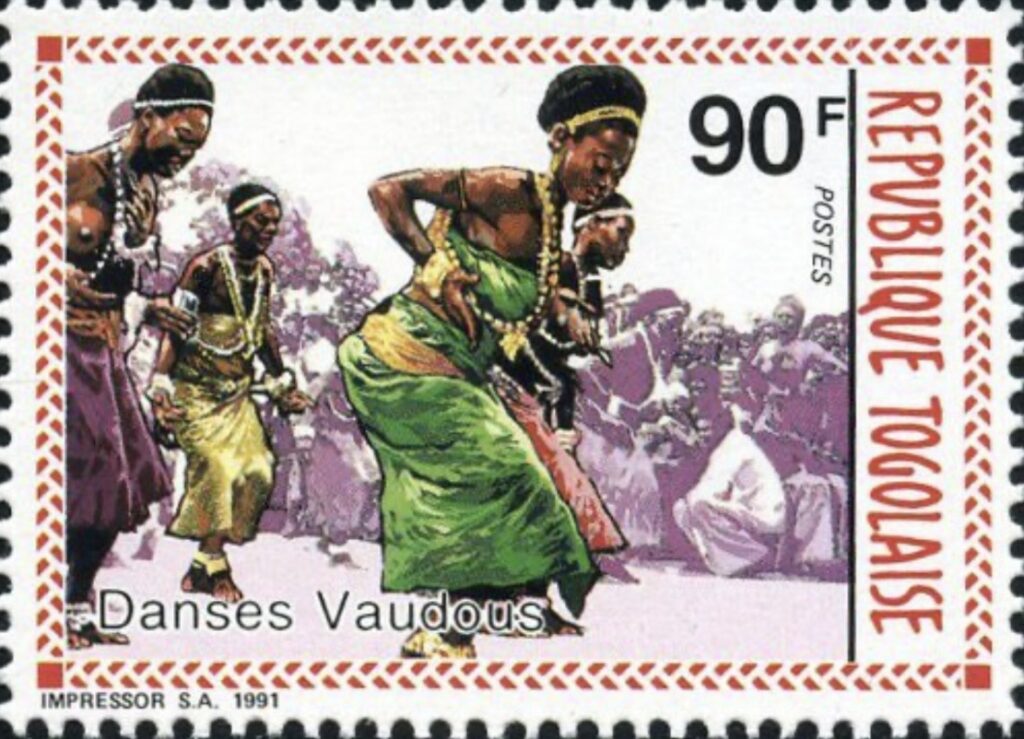
Togo did a series of three stamps about voodoo dancers in 1992. This and the next two illustrations constititute that series.
Ancestors matter just as much. The dead remain members of the family, and they are honored, fed and consulted. Divination, drumming, dance and spirit possession, in which a vodun is believed to “mount” a devotee and speak through him or her, are the heart of worship. There is no single holy book and no central pope. Knowledge passes from priest to initiate inside convents and family shrines, much as it has for centuries.
The religion was woven into the life of the Kingdom of Dahomey, which rose in the 1600s and grew powerful in part through the Atlantic slave trade. Ouidah was one of the busiest slaving ports in Africa, and by most estimates more than a million captives passed through the Bight of Benin on their way to the Americas. They carried almost nothing with them except their memories, their songs and their gods.
The Faith in the Americas
Haiti: Vodou
Nowhere did those gods take firmer hold than in the French colony of Saint-Domingue, today’s Haiti. Enslaved Africans from Dahomey, the Kongo and elsewhere blended their traditions into a new religion. Under the colonial Code Noir, enslaved people were required to be baptized Catholic, so devotees learned to honor their spirits, now called lwa, behind the faces of Catholic saints. Legba came to be associated with St. Peter, who holds the keys; the serpent spirit Damballa with St. Patrick, who drove the snakes from Ireland.
Haitian Vodou organizes its spirits into “nations.” The Rada lwa, cool and benevolent, trace their name to the old Dahomean city of Allada. The Petwo lwa are hotter, fiercer, and born largely in the New World. Ceremonies are led by a houngan (priest) or mambo (priestess) in a temple called a peristil, centered on a post, the poto mitan, through which the spirits descend. Before the drumming begins, the priest traces intricate symbols called vèvè on the floor in cornmeal.
Vodou also holds a revered place in Haiti’s national story. According to tradition, a ceremony at Bois Caïman in August 1791 sparked the slave uprising that became the Haitian Revolution, producing in 1804 the first free Black republic in the world. Vodou was persecuted for generations afterward, including by the Catholic Church and during the U.S. occupation of 1915 to 1934, but in 2003 the Haitian government formally recognized it as a religion.
New Orleans: Voodoo
Louisiana’s Voodoo grew from two streams: Africans brought directly into French and Spanish Louisiana, and a wave of refugees from the Haitian Revolution. In 1809 and 1810 alone, thousands of people expelled from Cuba, white, free Black and enslaved, all originally from Saint-Domingue, arrived in New Orleans and roughly doubled its population. They brought Vodou with them.
On Sunday afternoons in the early 1800s, enslaved and free people of color gathered at Congo Square to drum and dance, one of the few places in North America where African music and ritual were practiced in the open. The most famous figure of the era was Marie Laveau (1801–1881), a free woman of color and hairdresser whose reputation as the “Voodoo Queen” made her a legend in her own lifetime. Her tomb in St. Louis Cemetery No. 1 still draws visitors who leave offerings.
New Orleans Voodoo became more Catholic, more commercial and more closely tied to folk magic than its Haitian parent. It is worth separating from hoodoo, a system of charms, roots and conjure practiced across the Protestant South that borrows African, European and Native American elements but is not, strictly speaking, a religion. Much of the modern tourist trade in gris-gris bags and “voodoo dolls” owes more to hoodoo and to Hollywood than to the old faith. The pin-stuck doll, in particular, has deeper roots in European folk magic than in anything practiced in Dahomey.
Cuba and Brazil
The story does not end with Haiti and Louisiana. In Cuba, the dominant Afro-Cuban religion is Santería (also called Regla de Ocha), which descends mainly from the Yoruba of Nigeria. Alongside it survives a smaller tradition called Arará, a name that again points back to Allada and the Fon. In Brazil, the Candomblé religion includes a “Jeje” nation that preserves Fon vodun worship, and in the northern state of Maranhão, a temple called the Casa das Minas has kept Dahomean royal spirits alive for nearly two centuries. Tradition holds that it was founded by a Dahomean queen sold into slavery after a palace power struggle.
All of these faiths share a family resemblance: a distant creator, a crowd of intermediary spirits, ancestor veneration, possession, drumming and a long habit of hiding African gods behind Catholic saints.
Vodun at Home Today: Benin and Its Neighbors
While the faith was being reshaped across the Atlantic, it never stopped being practiced in West Africa. It has survived French colonial rule and missionary campaigns, and in Benin it survived something harsher. After a 1972 coup, the country was renamed the People’s Republic of Benin and governed for nearly two decades under a Marxist-Leninist regime that branded Vodun a backward superstition and pushed it underground.
When democracy returned in the early 1990s, the religion came back into the light. In 1993 Pope John Paul II visited Benin and met with Vodun leaders. Then the government did something remarkable: it declared January 10 a national holiday in honor of Vodun and the country’s other traditional religions, first observed in the late 1990s. Today relatively few Beninese list Vodun as their only religion in the census, but it runs deep beneath the surface of national life, and many Christians and Muslims still visit shrines, consult diviners or take part in family ceremonies.
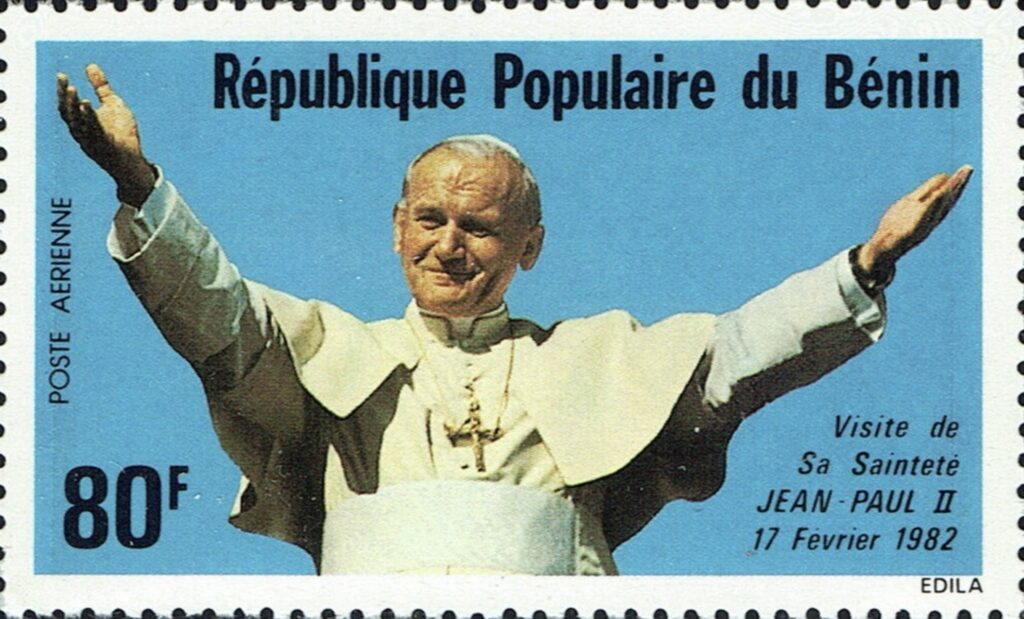
Benin has issued two stamps honoring Pope John Paul II, first when he visited in 1982, then when he visited in 1993. It was during his second visit that he met with voodoo leaders.
Vodun Days in Ouidah
For years the January 10 holiday centered on ceremonies on the beach at Ouidah, the old slave port that Beninese call the spiritual capital of Vodun. In 2024 the government reshaped the celebration into a larger, multi-day international festival called Vodun Days, and it has grown at astonishing speed. Official figures put attendance at about 97,000 visitors in 2024, jumping to more than 435,000 the following year. A new open-air venue, the Arène de Ouidah, was inaugurated for the 2025 edition.
The most recent festival, the third, ran January 8 to 10, 2026. President Patrice Talon opened it, arriving aboard a motorized tricycle, which has become a popular emblem of the festival, and stayed to watch the Egungun masked parades in Maro Square. The schedule mixes the sacred and the secular: a big beach concert with Beninese and international performers, a grand Vodun ceremony with cultural shows, and closing celebrations in the arena and on the beach.
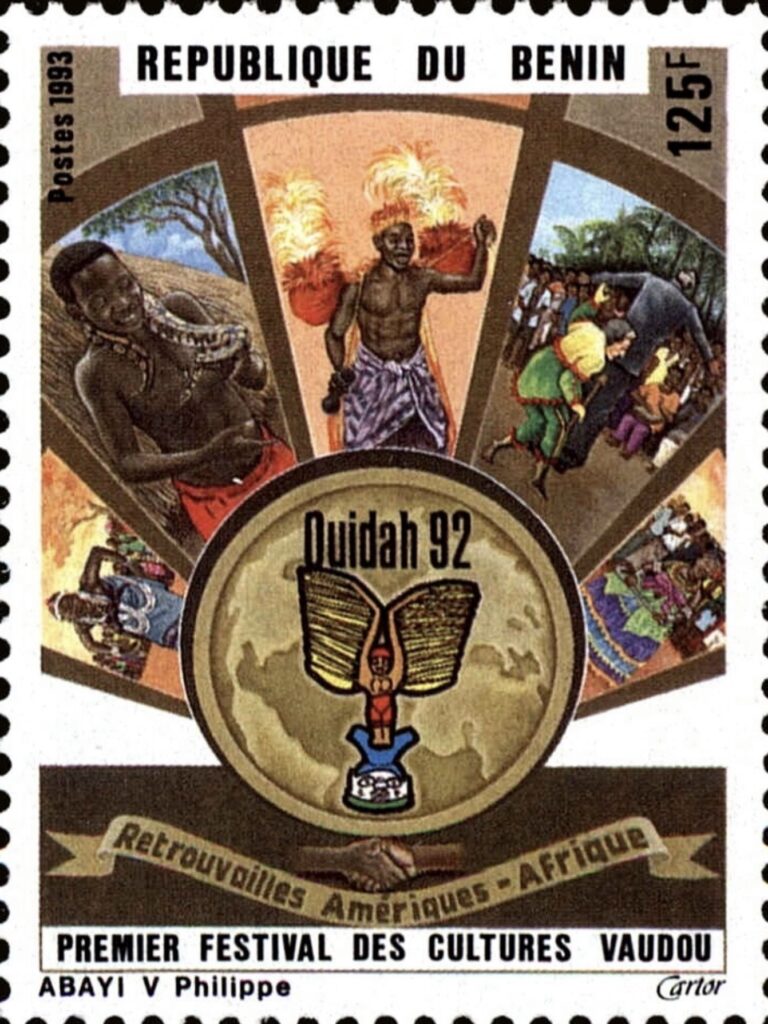
Visitors see things that appear nowhere else on earth. The Egungun, masked figures covered head to toe in layers of brilliant cloth, are believed to embody returning ancestors and whirl through the streets as crowds keep a respectful distance. The Zangbeto, the “guardians of the night,” look like towering haystacks of raffia that spin and lurch, traditionally serving as a kind of spiritual police force. Ceremonies take place in the sacred Kpassè Forest, at the Temple of Pythons, which faces the town’s Catholic basilica across a small square, and at the Door of No Return, the seaside arch at the end of the old slave route where captives last stood on African soil.
That last site gives the festival its emotional weight. Increasingly, descendants of the enslaved come from Haiti, Brazil, the Caribbean and the United States to reconnect with the faith their ancestors carried away. One American, Charisma Freeman, was recently named a traditional queen, a striking symbol of a religion that has come full circle. The next Vodun Days are expected in early January 2027.
Beyond Benin
Neighboring Togo shares much of the same tradition among its Ewe population, and the capital, Lomé, is home to the Akodessewa market, a sprawling bazaar of herbs, charms and animal parts used in traditional medicine and ritual. Ewe communities in eastern Ghana maintain their own shrines. And in southwestern Nigeria, the closely related Yoruba religion of the orisha holds its own great gathering each August, the Osun-Osogbo Festival, in a sacred grove recognized by UNESCO as a World Heritage Site.
Seeing It Plain
Vodun, Vodou and Voodoo have been feared, mocked, banned and commercialized for more than three centuries. Yet the faith has outlasted the Kingdom of Dahomey, the slave trade, colonial governments, a Marxist dictatorship and generations of bad movies. What survives is not a cartoon of curses and zombies but a living religion built around honoring the dead, keeping faith with the spirits of nature and binding communities together through music and dance.
It is also a reminder that history travels in both directions. The gods that left Ouidah in chains came back, transformed, through Port-au-Prince, New Orleans, Havana and Salvador da Bahia. And every January, on a beach in Benin, the descendants of those who left and those who stayed meet again.